By Brent Thompson
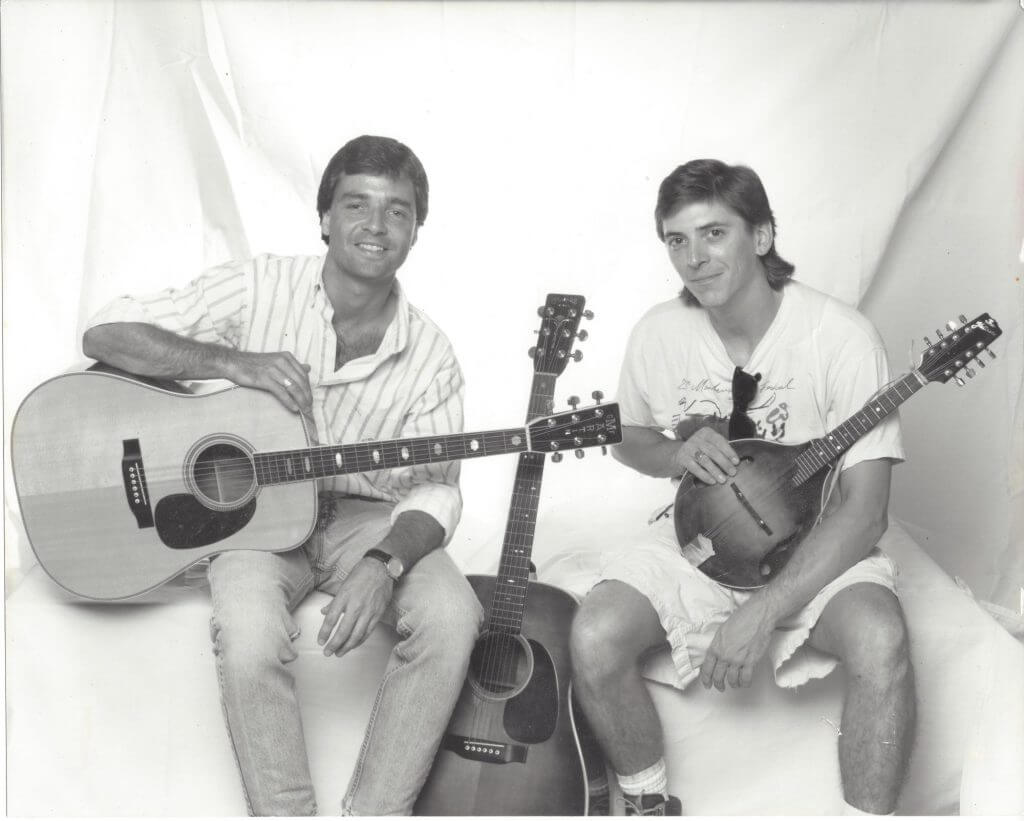
As with many musicians, the inception of Laine Poole and Jimmy Gauld’s musical journey involved a girl.
“We went to the same school. I didn’t know him, and he didn’t know me,” Poole, sitting in a local brewery, recalls.. “We both knew the same girl that lived across the street from me. Per usual, I headed over to Molly’s, and there he was with a guitar making time with her. I said, ‘Let me see that guitar,’ and I started playing “The Needle and the Damage Done” by Neil Young. The first words out of Jimmy’s mouth were, ‘You’re not playing that right,’ and he was right. Ever since then, I’ve vowed to be sure that I know a song before I play it live.”
From there, a lasting musical partnership was forged. Eventually, the duo’s inevitable discussion about “making it” in the music business came to the forefront. “We had a conversation and said, ‘We need to decide. Are we going to do this or are we not going to do this?,” Poole says. “We were starting to get investors that were going to give us money to go into a recording studio, and I was seriously thinking, ‘Could we get signed?’ We decided we had to get out of Birmingham.” And they did a lot more than just leave the city.
“We went to Europe for a few months,” Poole recalls, “When we first got there, we sat by the [River] Thames, and a crowd gathered. We put the hat down, and they started putting money in the hat. We thought, ‘Maybe this is going to work.’”
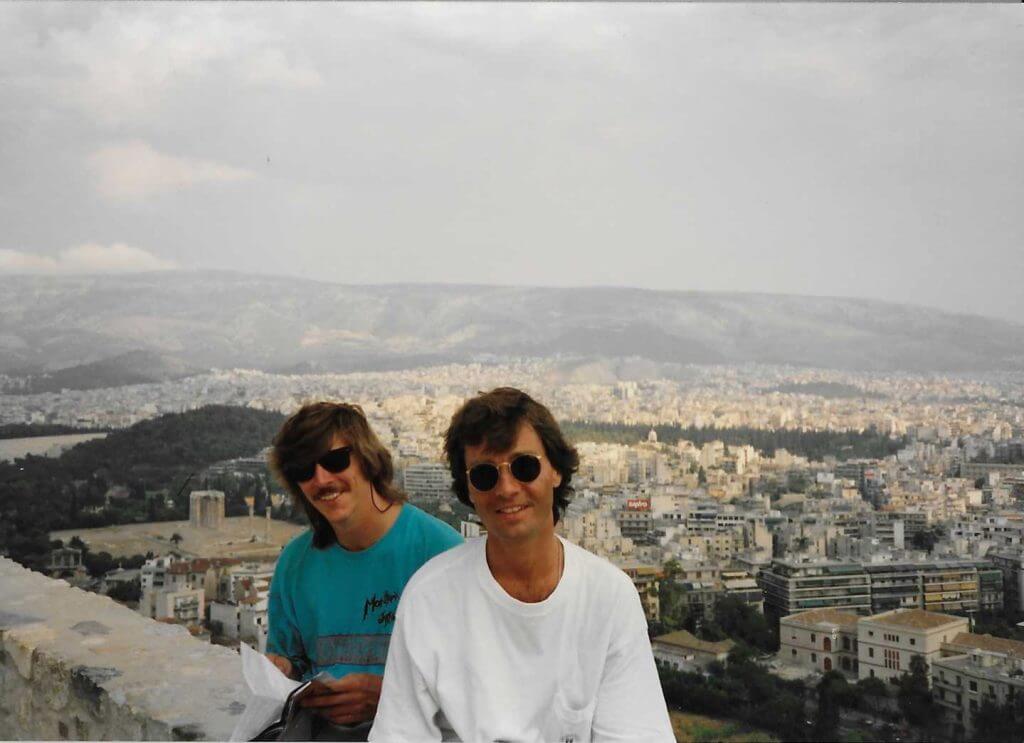
From there, the pair embarked on a European trek that resulted in great life experiences but eventual weariness as well. “We went to Brussels, Belgium, but couldn’t make any money. Munich, Germany, ended up being our hub because, with the Deutsche Mark, we were getting five to seven dollars at a time, and we were making $100 an hour apiece playing on the street. Then we’d go off to Greece and blow it,” Poole says with a laugh.
From there, Poole moved to Georgia and kept playing while Gauld moved to Mississippi and took a break from performing. The two eventually moved back to Birmingham at roughly the same time. “After I got married and had kids, I wasn’t playing at all” Gauld says. “It was a good break after playing for a decade.”
But the pandemic proved to be an unlikely catalyst for Gauld’s renewed interest in playing and performing. “What got me interested in playing again was Covid,” he says.“Everybody worked from home, and my desk sits next to a rack of 10 guitars. I played every day for hours. I learned about 120 new songs, and I told Laine, ‘I want to go out and play these for people.’ I went to Billy’s [Bar & Grill] and started playing on a night when they didn’t normally have music, and 100 percent of the money went to charity. From there, we were booked, and we still play at Billy’s.”
“We learned all these new songs during Covid, and we had a whole night of nothing but new material. People said, ‘We want to hear the old stuff.’ When we got back together, we just fell right into it—we didn’t miss a lick,” Poole recounts.
“I think it’s easier now because my lifestyle is so much calmer. I don’t smoke, it’s easier to sing and we’ve got years of practice under our belts. And now that we aren’t doing it as a living, we don’t have to have the work—you don’t have to fill up your calendar to pay the rent. Also, as we’ve gotten older, playing from six to nine is better than when we played from 10 until two,” Gauld adds.
In addition to Poole and Gauld’s friendship of nearly 50 years, music has provided them with an unspoken connection. “When you play music, it’s a form of communication. He knows what I’m going to do before I do, and I know what he’s going to do before he does it because we’ve been playing so long together,” Gauld says. “There’s a special relationship within bands between bandmates,” Poole adds.
Unlike solo performers, the partnership provides Poole and Gauld a friendly face at every performance. “When you’re playing at a bar, you don’t know anybody who’s there,” Gauld says. “It’s nice to have a friend onstage with you.” Poole adds, “We play to each other when the crowd’s not into it. Those are some of the most enjoyable nights.”
Anyone who knows guitarists knows that collecting instruments is a common characteristic among them. Gauld and Poole are no exceptions to the rule. “It’s ironic because, back when I was doing it full time, I could never afford all the guitars that I have now. I’ve got some nice guitars now,” says Gauld. “When we did it for a living, I had a guitar and a mandolin,” Poole recalls, “Now, I have 40 guitars, six mandolins and two banjos.”
In addition to their personal relationship, Poole and Gauld are linked by a determination to continually hone their skills and uphold their respective ends of the partnership. “Knowing that the person is going to learn their part is not even a second thought of mine,” Poole says. “When we get together, I know he’s going to do what he said. He’s trustworthy, punctual, reliable—this guy is a rock. That’s been great for me because I’m a little flighty. I can go off on improvisations and he lets me, but he’s always there when it’s time to come home or when I get lost.”
He continues, “You learn how to practice to make the show better. I practice those hard phrases and solos that I know I want to get right. I can’t rely on it to always be there—you have to practice. I want to be reliable and to know that when I come to the show, I’m prepared. I want to bring good musicianship to the table—it’s so important for me to do that. If you stop practicing, there is going to be a hole in your music, and people are going to hear it eventually. So I work at it. I learned to play fast and hot, and I can’t do that anymore, so I’ve found something that I wish I had learned in my teens, which is restraint. Silence is part of the music—you don’t have to play hot all the time. So it’s as important—or more important—to play something interesting. I thought I was doing that when I was younger, but I wasn’t. It was just hot and fast. I’m trying to be much more tasteful and more melodic. Less is so much more. Youth can’t grasp that and I wasted my time. I could have been interesting all along.”
Gauld adds, “I enjoy practicing alone in my basement. For me, learning is like solving a puzzle. Some people do crossword puzzles or Sudoko, but for me learning a song is like solving a puzzle, and it’s the one thing I do where I completely lose track of time. I can go down there at seven o’clock and play for three hours, and it feels like I’ve been down there for 10 minutes. The music gives me a level of satisfaction that I just don’t get in anything else.”
And as if nearly 50 years of friendship and music isn’t enough, Poole even met his wife through Gauld. “Every good thing that’s happened to me has come from this relationship in some way,” Poole says.
As the conversation closes, one really pressing question has to be asked. Which one of them ended up with the girl across the street? The response comes quickly and in unison. “Neither of us.”