By Cara Clark
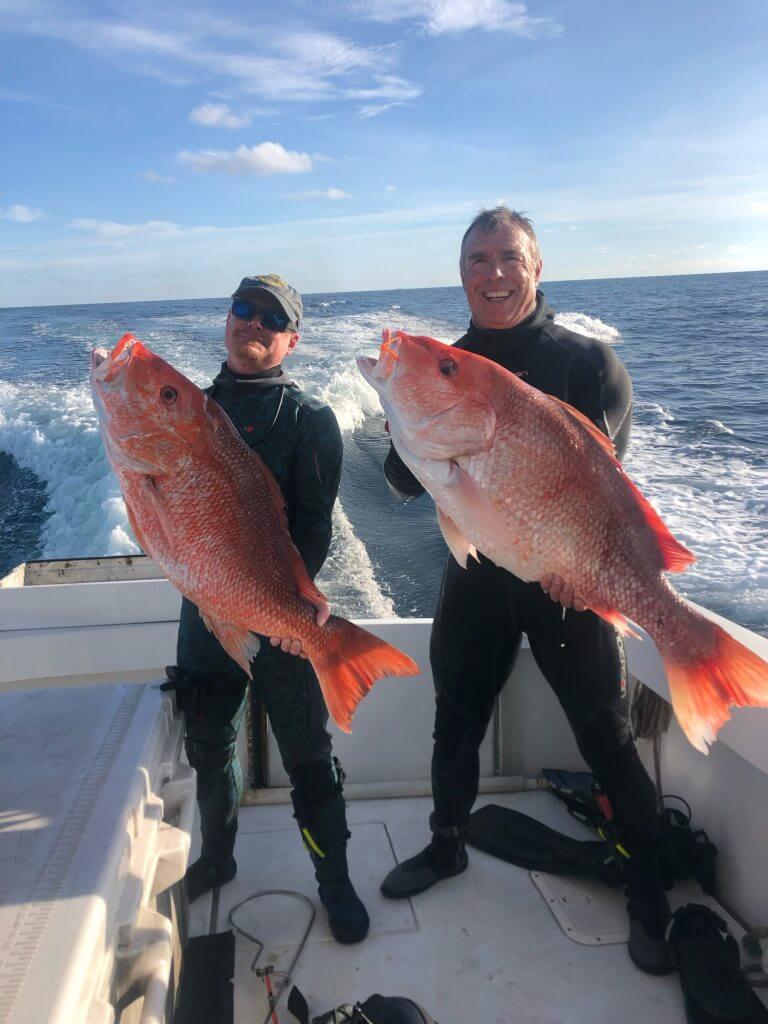
When Mitch Bruhn and Forest Phillips dive, it’s not just for sport—it’s for legacy. Beneath the Gulf’s surface, they move like predators, strategists and old friends. Years of diving, danger and discovery have forged more than a team—they’ve built a brotherhood.
Off Alabama’s coast, far from sunbathers and surfboards, they suit up with spearguns in hand, hunting fish, solitude—and sometimes survival. For them, spearfishing isn’t a hobby. Phillips and Bruhn are part of a tight-knit community that thrives under pressure. They dive for glory, groceries and the thrill of a world few ever see.
“Winning is never an accident,” Phillips says. “We come with a plan. Backup plans, too—in case the wind shifts or the engine fails. You have to prepare when you’re competing against locals who live on the coast. We take off work, spend nights down there—it’s a grind.”
Preparation is everything. A single day might include 140 miles of travel, multiple dives and the chase for elusive fish and leaderboard glory. But the real prize? Discovering new dive sites—the kind you never talk about but never forget. “We find spots all the time,” Phillips says. “But I only share them with Mitch and Team Southern Skin Divers.”
The difference between commercial and competition diving is mindset. “When I was selling fish commercially,” Phillips explains, “I wasn’t up at 3 a.m. and diving all day. In tournaments, it’s full throttle—every fish matters.”
And when those fish hit the grill? “It’s the very best expensive free fish,” Bruhn jokes.
Sharks, Snapper, and Brotherhood
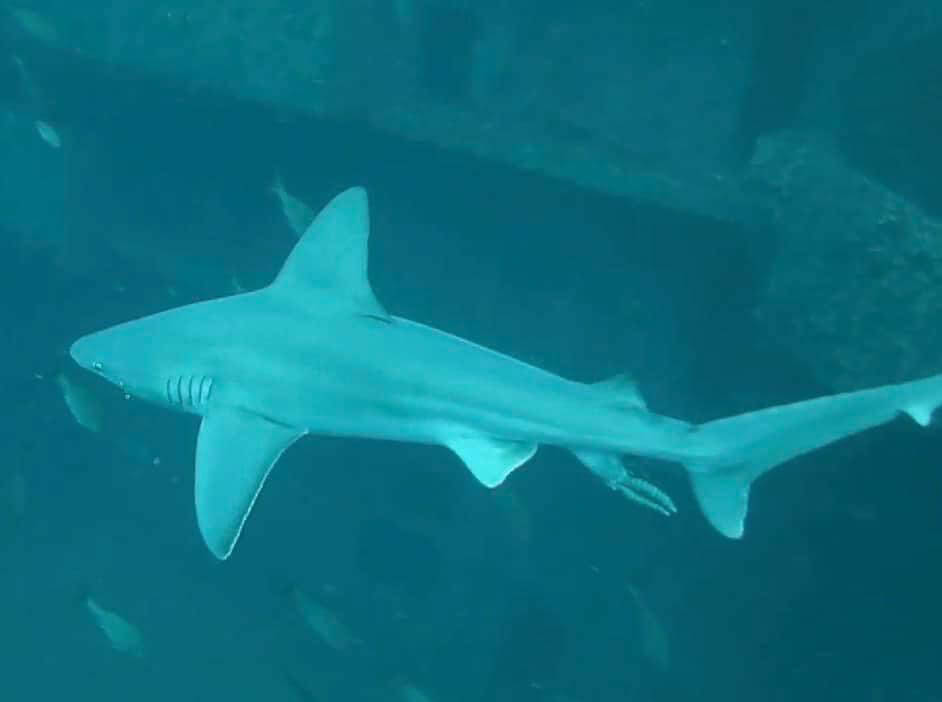
“There’s nowhere like offshore Alabama for artificial reefs,” Phillips says. He and Bruhn have been diving together for over 15 years—often 30 to 60 miles offshore in deep, murky waters filled with amberjack, snapper and sharks. “Spearfishing here is tough,” Phillips says. “You’re risking your life. We’ve seen bull sharks, tigers great hammerheads—even great whites.”
Bruhn has logged over 2,250 dives. Phillips has more than 10,000 and leads over 50 dive trips a year through Southern Skin Divers Supply—the Birmingham dive shop he co-owns. It’s the country’s oldest continuously operating dive shop, open since 1953.
Their journey began when Bruhn’s son returned home and sought adventure. They got recertified at Southern Skin Divers, and soon, diving became their life.
A Close Call at 130 Feet
On one dive near Orange Beach, Phillips and his team found themselves circling with a 14-foot great white. “I shot a snapper, and fellow diver Chase Tucker above me started yelling what I thought was ‘good shot.’ Then I realized he was yelling, ‘Shark!’” “I looked up and saw it—classic silhouette, massive. I had red snapper strapped to my waist.”
Tucker caught the moment on video, and the footage went viral. Back on the boat, Bruhn joked, “I’m like that astronaut in the module while everyone remembers Neil Armstrong. I got them there, but nobody remembers me.”
They’ve had other close calls with sharks. “We always watch shark behavior,” Phillips says. “If they start darting or acting aggressive, we go back-to-back and get out. We’ve fought sharks off each other many times.”
Ask Bruhn his closest call? “It was a pitch-black dive at 155 feet due to storms on the surface, so dark I couldn’t see my dive buddy less than 10 feet away. All of the sudden, a shark’s head came within six inches of my face,” he recalls. “It was a 14-foot tiger shark, big enough that I could’ve swum into its mouth. It happened so fast that I couldn’t even lift my speargun in time. It slapped me with its fin, my mask shifted, and I bit my regulator hard. After it was over, I was so focused on the dive that it didn’t hit me that I had almost been eaten. I cannot confirm nor deny that a tattoo may have been involved afterwards!”
Still, they don’t harm sharks unless absolutely necessary. It’s about respect—and safety. “You’re only as good as your teammates,” Phillips says. “We always have each other’s backs.”
The One That Got Away
Even after thousands of dives, some fish stay with them—especially the ones they never catch. “There’s one Kubera snapper I visit,” Phillips says. “She’s too fast. I’ve never even pulled the trigger—and I’m glad. It’s the only fish I’m almost afraid to shoot.”
Bruhn, however, did land a 65-pound Kubera snapper during the 48th Alabama Open—beating the competition by 30 pounds. “We saved that fish for last at weigh-in,” he laughs. “Had it in a cooler by itself. Rolled it out like a showpiece.”
Phillips adds, “He got it when it mattered—in front of all the masters. That’s what it’s about. We’re like ninja Jedis. Not many of us, but we compete at the highest level.”
Even now, the night before a dive feels like Christmas Eve. “New stuff happens all the time,” Phillips says. “That’s what keeps us going.”
Where It All Begins
All of it starts in Birmingham—at Southern Skin Divers Supply. “I wouldn’t do any of this without Forest and that shop,” Bruhn says. “It’s the safest, most qualified group in the Southeast.”
Phillips even created a course called Gulf Coast Spearfishing, now recognized nationally. “We’re doing dangerous stuff—as safely as possible,” he says. “We want people to dive as long as they want, not get scared off by a bad experience.”
For the Love of the Hunt
Phillips averages 300 to 400 dives a year. Bruhn does around 50, balancing diving with running a successful construction business. When they’re not competing, they’re grocery shopping—for snapper, lobster, cobia, grouper and more. “We go down, look around and pick our fish,” Bruhn says. “Way better than dropping a line and waiting.”
They’ve pulled 10-pound lobsters from reefs, hauled up groupers that needed two people to lift and spotted sunfish the size of car hoods. “We’re only here a short time,” Bruhn reflects.
Phillips finishes the thought: “You’ll never know what’s waiting down there.”
This is the story of two men bound by breath, precision and purpose. To them, spearfishing isn’t just a sport—it’s a way of life.