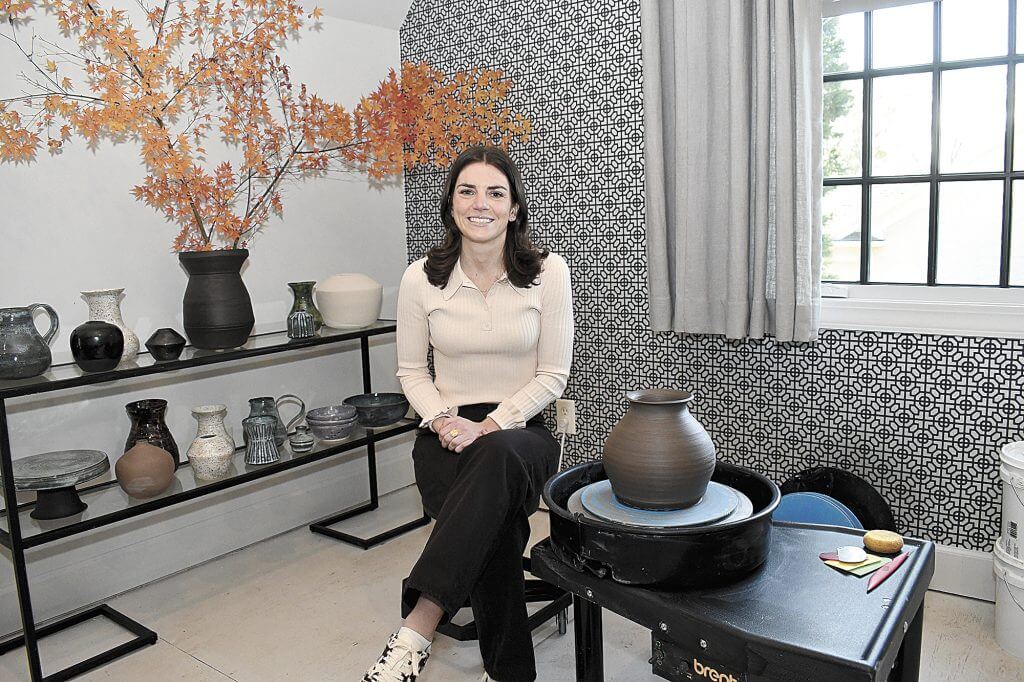
All pottery starts out the same—as a block of clay. Every day starts out the same—you wake up.
From that point, what you make of the clay or your day is up to you.
For Brantley Sanders, most of her days involve spending time quietly, patiently shaping blocks of clay into beautiful works of art.
Three years ago, Sanders didn’t even know how to use a pottery wheel. Her days were much more active. She was living with friends and working in Denver, climbing fourteeners, biking, skydiving, backpacking, running and skiing on weekends.
November 8, 2022, began like other days, but not long after she woke up, Sanders could tell it would be a day she would remember. In the morning, she learned she had earned a raise and a bonus at work. In the afternoon, she and a friend began training for a marathon. In the evening, she went with friends to a Noah Kahan concert they’d been looking forward to. Only at the very end of the day did anything go wrong, and even that seemed at first to have been a bullet dodged.
In the car on the way home from the concert, Sanders and her friends were waiting at a stoplight when a drunk driver ran the light and smashed into the car. Shaken and shocked, the girls climbed out of the wreckage. Although the car was totaled, the girls had no apparent injuries. In fact, they all seemed so okay that neither the firemen nor the police officers who responded to the scene summoned an ambulance. Instead, they simply suggested the girls call an Uber and go on home.
Shortly after the accident, Sanders developed a headache, but she didn’t think that was unusual for someone who’d been in a car accident. Days later, when she was still suffering from severe pain, Sander’s roommates finally convinced her to see a doctor. The doctor’s diagnosis—a concussion—seemed to Sanders like no big deal. She had been diagnosed with a concussion two years earlier after a bike accident, and that one was no big deal.
The doctor advised Sanders to take a few days off work and rest, but her symptoms did not abate. Noise and lights made her headache worse. Her vision was affected. Making even small decisions was challenging. She forgot to eat. She couldn’t drive. Sanders’ roommates had to walk her to the gate to make sure she boarded the right flight home for Thanksgiving. After Thanksgiving, Sanders returned to Denver, but her headaches and vision problems made doing her computer-based job impossible—she had to call her mom for help drafting even the simplest emails. When Brantley forgot her own birthday on December 4, she and her family realized they needed to do more than simply wait for things to improve, and she moved back to Birmingham to focus on her recovery.
Because Birmingham did not have a comprehensive concussion treatment center, it took time to assemble a treatment team. Sanders credits her parents for tirelessly pursuing specialists and treatment programs across the country. Her condition, called Post Concussion Syndrome (PCS), is a complex combination of physical, cognitive, emotional and sleep-related issues stemming from traumatic brain injury. For a very small percentage of concussion patients like Sanders, the symptoms, including dizziness, confusion, headaches and difficulty concentrating, do not resolve within a few days or weeks. The reasons are not well understood, and because each brain and each injury is unique, a treatment that helps one patient may not help another. “My parents have been really great, because I can’t do the research,” she explains.
Over the past three years, Sanders has traveled to Nebraska, Pennsylvania, Utah, Chicago and Denver for treatments. Some, she says, were experimental and frankly, pretty crazy, but she remains patient, optimistic and willing to keep trying.
On the other hand, Sanders alone deserves credit for discovering and developing her talent with clay. Unable to work, Sanders’ doctor recommended she find something to do with her days besides going to medical appointments. Following his advice, Sanders decided to look for a consistent activity she could not just tolerate but enjoy. She found an opening in a pottery class on Wednesday mornings, which she says is a perfect time for her. Sanders enjoys learning not just from the teacher but also from the community of artists she has come to know through the class.
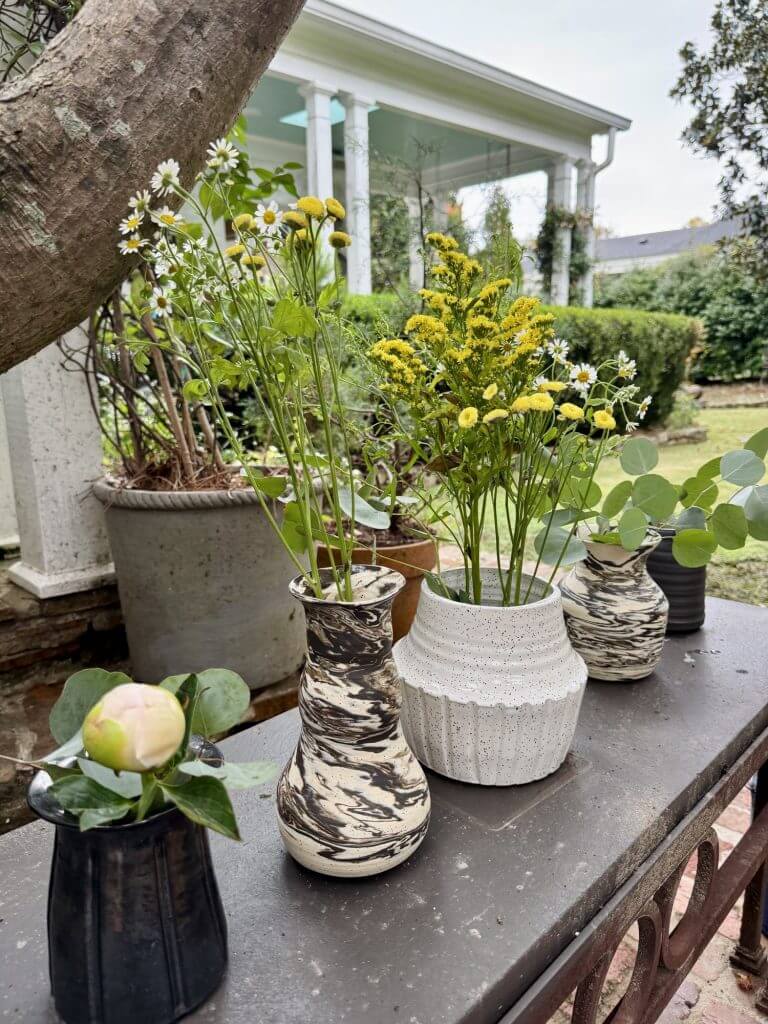
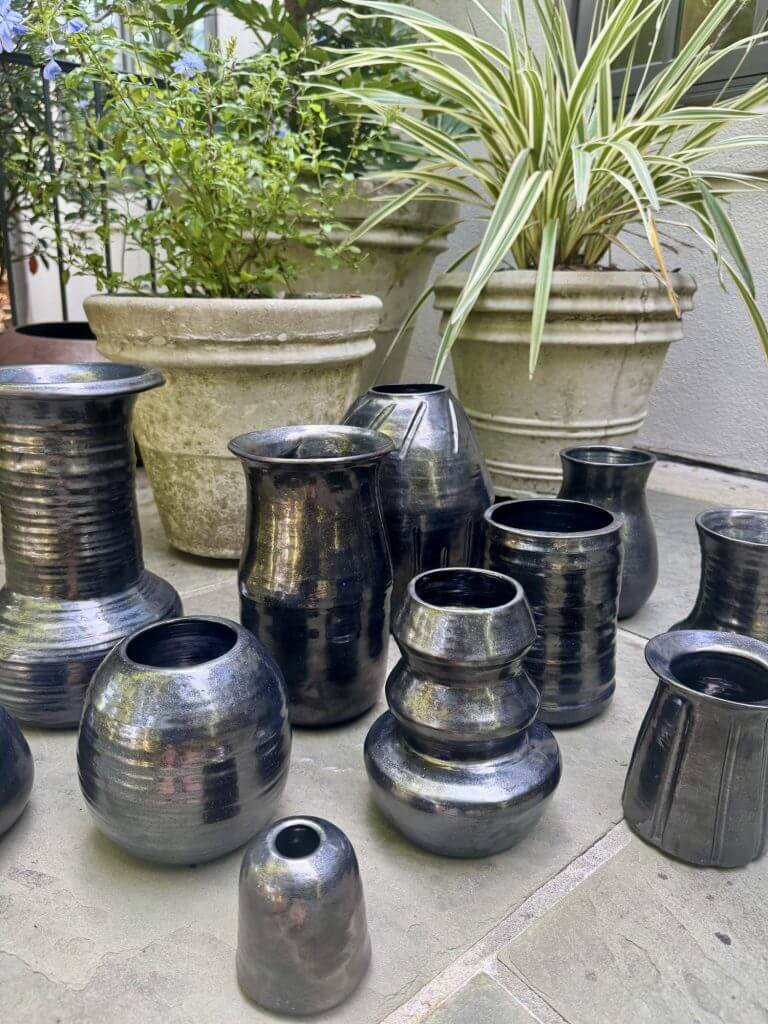
Although Sanders may not be doing complex math problems right now, she experiments with physics every day. Not content to stick to making coffee mugs and ring dishes, Sanders likes to see how high she can coax the clay before the walls threaten to collapse. She has also begun making two-part vessels, which requires making the top piece upside down and matching its edges precisely to the edges of the bottom piece.
Metaphors abound in a conversation with Sanders about pottery. She seems to have happened upon the perfect outlet for this time in her life. As she explains, “You never know if something is going to turn out. It’s not like when I sit down at the wheel I can see the end, what it’s going to look like. There are so many decisions along the way, so many steps, you touch it so many times, and there are a lot of opportunities for something to go wrong. The glaze could react weirdly with your clay, the piece could explode in the kiln, or somebody else’s piece in the kiln could explode and break yours. Pottery is so unpredictable! Sometimes when you sit down, you have a strong idea, but usually I just start making the walls and follow the movement of the piece. I try to push the clay to be as interesting as possible, but I also try not to overthink it, which is kind of nice. Sometimes you push it too far, and you really have to get creative if you want to save it. Sometimes you smash it, but I don’t do that very often. Another thing I like about clay is that you can recycle or re-use it as long as it doesn’t get fired. So, if a piece doesn’t work out, it’s not the end of the world.”
This is Sanders’ personality in a nutshell: she turns negatives into positives.
Meanwhile, Sanders and her parents continue searching for and trying treatments that might help. She knows it’s difficult for people to understand what she’s experiencing, because her injury is invisible. Indeed, people often exclaim, “But you look great!” as though they expected to see her pale-faced and grimacing in pain.
When asked to describe how she feels, Sanders says she’s basically had a very severe migraine for three years—the pain ebbs and flows but never truly goes away. There has been progress—the problems with her vision have improved, and she is figuring out how to manage larger social settings. As she says, life keeps moving, and she is determined not to be left behind. She keeps in touch with friends from high school and college, and in November she and childhood friend and painter Frances Rebula collaborated in a joint exhibition that was very well received.
Some people tell Sanders that everything happens for a reason, but that’s not exactly how she sees it. For Sanders, it’s another chapter in her life’s story, and while she works through it, she’s using her gifts to make something beautiful.
You can follow Brantley Sanders’ art on Instagram at @madebybrantley