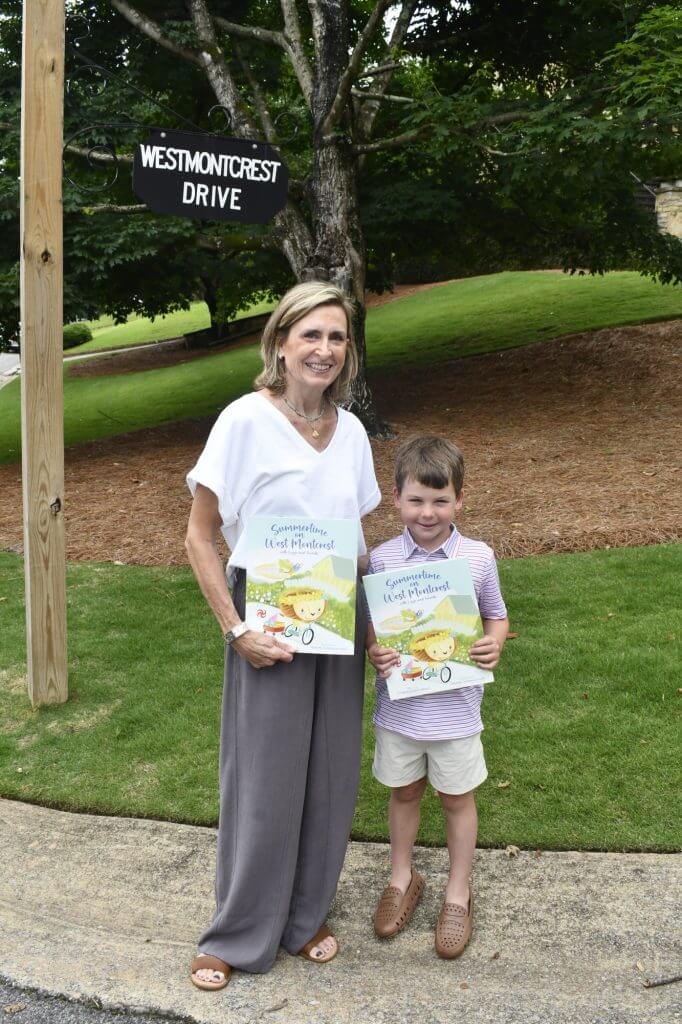
By Mary Clare Ingram Photo by Jordan Wald
At two years old, Elizabeth Hubbard was diagnosed with 96 percent hearing loss. Now, she has written a children’s book to teach the value of inclusion of those with disabilities. Her book, Summertime on West Montcrest, uses the lessons she has learned throughout her life to show kids the often-overlooked beauty of disability.
“I’ll be the first one to stand up for others who have disabilities,” Hubbard says. In her book, the main character Lizzie the Lion plays with neighborhood kids, echoing Hubbard’s childhood, and teaches that all kids are valued, regardless of the disabilities and differences they have.
Growing up, Hubbard drank Coke floats, made dandelion crowns and caught lightning bugs. She rode bikes around her neighborhood in Mountain Brook from sunup to sundown, just like any other kid. The only difference was her hearing, just like Lizzie the Lion.
The obstacles she faced because of her disability shaped her into who she is today, and she says they gave her superpowers. Learning to speak with a hearing aid taught her to be skilled at reading lips and to defend herself and others.
Hubbard says that when she was in elementary school, she saw a few kids whispering about her. She marched up to them and said she could read their lips and explained that she was just like them, she just couldn’t hear, and they apologized. She says she has always been quick to stand up for herself and others when people don’t understand disability.
She recalls being athletic as a kid, running faster than the boys. She won two physical fitness awards, doing exercises until the coaches told her to stop, and everyone else was done.
Lizzie the Lion emphasizes bridging the gap between kids and their disabled peers. Hubbard says it’s important for kids to include everyone in their circles. Hubbard’s dad taught her to be self-reliant. She says she looks out for herself, but her closes friends do too. Hubbard sees this in her life now as her friends often act as her ears, relaying conversations she missed. “I have always said if it’s important, let me know, but if it’s gossip, I don’t need to know that,” she says.
Hubbard is not shy about her disability and embraces opportunities to teach others about it without judgment. She often has people ask her where she is from and about her accent, which has come from learning to speak with a hearing aid. She says it’s her “hard-of-hearing accent,” and watches them apologize for not knowing. “I just tell them it’s no big deal, it’s just a part of who I am,” she says.
Hubbard hopes her book will relay this sentiment, teaching kids that being unique is a superpower and to care for one another, regardless of differences. She says her main message is that, working together, people can help each other out, with or without disabilities.
Now, she implements this in her own life through art and art education. Hubbard teaches kids classes, adult workshops and art camps in Birmingham, where she lives with her husband. She has two children and five grandchildren, with whom she has shared her book and stories. “No matter where you are or who you are, my wish is that we all truly help each other,” she says.