By Karim Shamsi-Basha
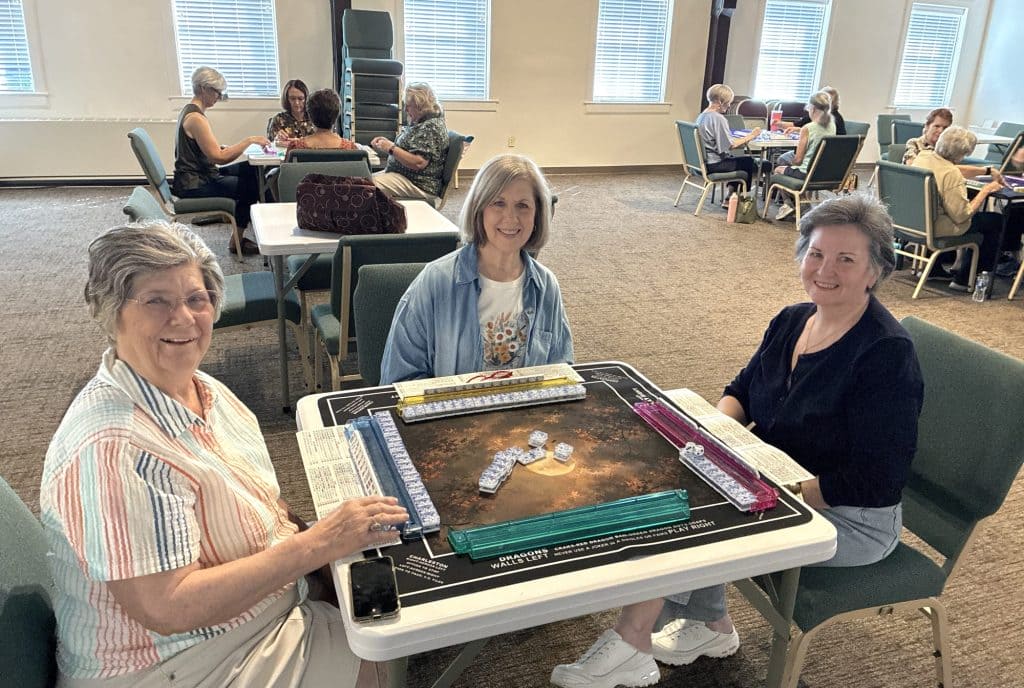
Step into room 300 at Trinity United Methodist Church in Homewood on a Thursday, and the first thing you notice is how little you hear. Cloths cover the tables, and the tiles glide across them almost silently, smooth and cool under the fingertips, painted with bamboo, characters and circles. Hands build, sort and slide, as friends settle in to see what the tiles will bring.
The game has caught Hollywood’s eye, too. When Julia Roberts sat down with Stephen Colbert, she tried to explain the pastime that had quietly taken over her Tuesday nights. Mahjong, she said, is about creating order out of chaos, based on the random drawing of tiles. It is, she added, a little like life, which asks the same of us every day, with whatever wisdom and kindness we can muster.
Anyone who has held a tile in hand knows what she meant. A player draws, studies, hopes and discards, trying to shape something beautiful out of whatever luck handed them. Across the country, more people are pulling up chairs to try. And in Birmingham, the game has exploded.
At Trinity, you will find Susan Cercone, Debbie Dailey and Carol Davis bent over their racks, along with a rotating cast of friends. “I joined in 2020, right after Covid,” Cercone says. “There are about 50 people in the group, and it fluctuates by the week.”
The game they play has traveled a long way to reach a church in Homewood.
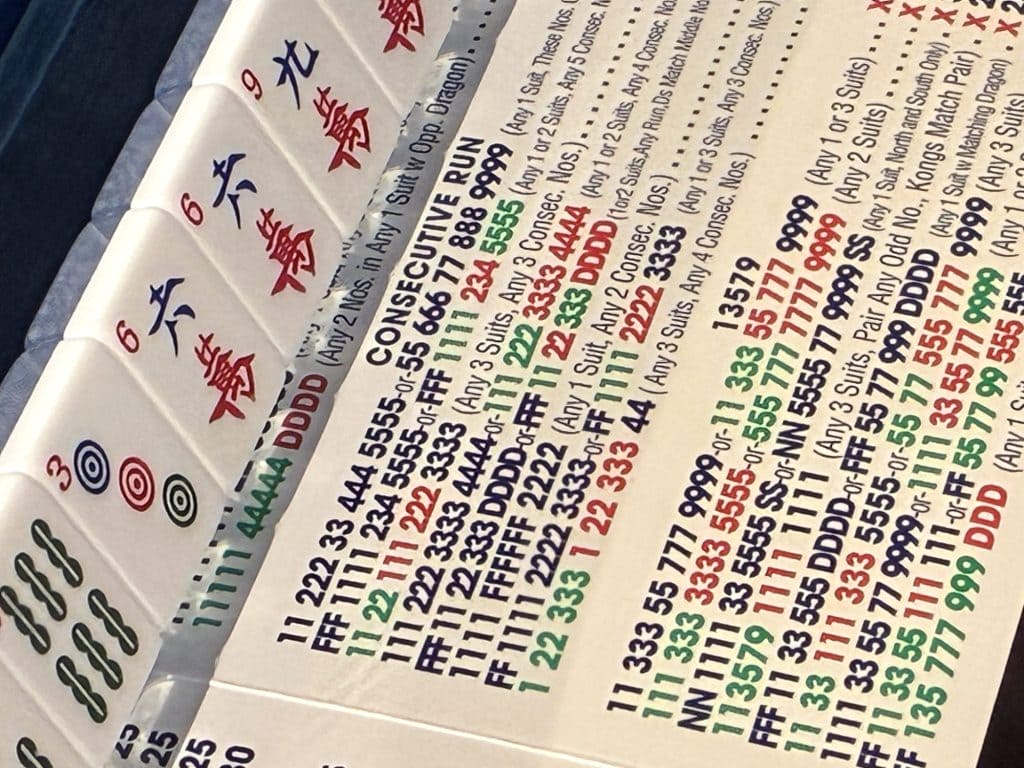
Mahjong was born in China in the 19th century and then spread across the world. It reached the United States in the early 1920s and became one of the great fads of the decade, played everywhere from society parlors to suburban living rooms. When the craze faded, Jewish women kept the game alive, and in 1937 a group of them in New York City founded the National Mah Jongg League, which still publishes the card of winning hands American players follow.
Today, the game is enjoying a revival that few saw coming. In recent years, mahjong has outpaced Uno, gin rummy and blackjack in Google searches. “When I started, it wasn’t popular,” Cercone says. “Then came the movie Crazy Rich Asians, and the Hollywood crowd started playing, people like Julia Roberts and Sarah Jessica Parker. Now the younger ones are into the game.”
For Dailey, the tiles are almost secondary. What keeps her coming back is the people across the table. “It’s a great community builder,” she says. “It keeps me in contact with people, and I’ve met so many new friends I would have never met otherwise. After the pandemic, we were all looking for human contact.”
That hunger for connection has turned the Trinity players into teachers. “Last winter we taught a class to 27 people, and there were lots of young folks,” Cercone says.
Learning the game takes patience. American mahjong is played with 152 tiles: three suits known as bams, cracks and dots, along with winds, dragons, flowers and jokers. Four players build a wall of tiles, and each is dealt 13, with the dealer taking a 14th. Then comes the Charleston, a choreographed exchange in which players pass tiles to the right, across and to the left, dancing them around the table in search of a better hand. After that, players take turns drawing and discarding, racing to match one of the hands printed on that year’s league card. The first to complete a hand calls out “Mahjong!”
It sounds simple. It is not. Because the league changes the card annually, even players with decades of experience must learn new hands, which keeps the game fresh and keeps everyone, veterans included, a little humble. “It takes both skill and luck. The rules are constant, but the game is not. It’s never the same twice. It makes you think, problem-solve and deal with change,” Davis says. Then she adds, “At my age, it keeps my memory healthy, and it brings me joy.”
Davis knows something about staying power. “I’ve been playing 20 years,” she says. “I don’t see it slowing down. It keeps me young!”
Around Birmingham, the tables keep multiplying. Players gather at bookstores like Barnes & Noble, at The Club and at the Jewish Community Center, where the game’s American roots run deepest. Many newcomers are drawn by the same mix of strategy and sociability that hooked the veterans.
Still, nobody at Trinity pretends the game comes easily. “It’s a hard game, and it takes a while to master,” Cercone says. “The best way to learn is to have someone sit by you while you play. There are days I win and days I lose. Half of it is luck, but the other half takes skill.”
The veterans are patient with beginners, at least at first. Once beginners learn to play on their own, the patience changes into something else. “We play with grace. When beginners make a mistake, we help them. But once you have experience and know what to do, the grace goes away!” Dailey says with a laugh.
Long after the last hand is called, the cloths are folded and the tiles are tucked back into their cases, still warm from all those hands. Next Thursday, they will spread across the tables again, and old friends and new ones will draw, discard and try to make a little order out of the chaos. Some days the tiles cooperate. Some days they do not. Either way, there is always another seat at the table.