By Keysha Drexel
Journal editor
By Keysha Drexel
Journal editor
Chances are that if you have lived, worked or shopped in the Birmingham metro area in the last 30 years, you have spent some time in one of the buildings in Bayer Properties’ 11 million square-foot mixed-use asset portfolio.
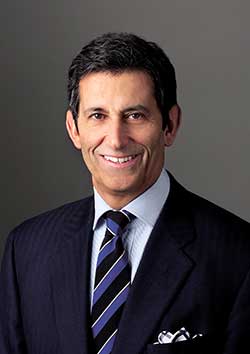
But the business acumen of Jeffrey Bayer is not the reason the Bayer Properties founder, president and chief executive officer is being recognized later this month.
Bayer will be honored Aug. 24 for giving the Birmingham Holocaust Education Center a home for the last decade and for supporting its efforts to make sure a new generation understands the lessons of the Holocaust.
“Jeffrey has provided a home for the BHEC in the Bayer Properties Building at 2222 Arlington Avenue for the last 10 years,” Phyllis Weinstein, director of the center, said. “His generosity has made it possible for us to concentrate on our mission, which is to help keep the history and lessons of the Holocaust alive.”
Bayer will be honored at the center’s fourth annual L’Chaim fundraiser at Temple Emanu-El on Highland Avenue.
“L’Chaim means ‘to life’ in Hebrew, and it’s often used as a toast and at times of celebration,” said Deborah Layman, producer of the event. “The event is a mix of entertainment, education and acknowledgement of the contribution of a member of the community.”
And that acknowledgement of his contribution to the community is something that makes the 65-year-old Bayer squirm in his seat a bit.
“I think it embarrasses me a little bit because there are so many other people who have done so much for this organization,” Bayer said. “I also have two partners (David Silverstein and Jon Rotenstreich) who own this building and who have supported having the center here. I’m just happy to do anything I can to help educate people about the importance of tolerance.”
The importance of tolerance is something Bayer said he learned growing up as a minority in Birmingham.
“I grew up here in Birmingham and went to Ramsay High School,” he said. “I was one of two or three Jewish kids in the whole school, and most of the kids had no idea what Jewish people were like other than the caricatures they saw in the movies or on TV. When people don’t understand something, they are afraid. That fear of something different can turn into hate.”
Throughout his life, Bayer said, his goal has been to show that no matter their religion, race or creed, people are mostly the same.
“Just look at the headlines, at the things going on not just in Israel but also in Syria and Ukraine–it all boils down to intolerance,” he said. “We have to do a better job of being tolerant of each other in this world and realizing that for the most part, we’re all the same and we all want the same thing. That’s why the work the center does is so important.”
Bayer said he saw the power of the center’s work recently at a reception for recipients of the Brenda and Fred Friedman Teacher Scholarships, which pays for Birmingham area teachers to attend workshops on how to teach their students about the Holocaust.
“Most of the teachers who receive the scholarships are not Jewish, but they are committed to teaching their students about the Holocaust and more broadly, about the dangers of hate,” he said.
Bayer said he thinks the key to breaking down barriers between Jewish people and others is pretty simple.
“It’s all about people spending time together and learning about each other and realizing that we are not so different after all,” he said. “That’s why my wife and I sponsored a trip to Israel back in November for seven (U.S.) Congress members who are evangelical Christians, including Michele Bachmann.”
Bachmann, a Republican representative from Minnesota, has made headlines several times for her controversial comments about American Jews.
“People asked me why in the world I would want to have anything to do with bringing Michele Bachmann to Israel, but the point was for people like Bachmann to actually spend some time around Jewish people,” he said.
The lack of personal contact with Jews frequently opens the door to stereotyping, misconceptions and suspicion, Bayer said.
“At the end of that trip, I had a couple come up to me and tell me how great it was to spend time with me and my wife, Gail. What they were really saying is that they didn’t have a lot of experience with or knowledge of Jewish people and that they learned we are not the stereotype you see everywhere.”
Bayer, who has been married to Dallas native Gail Bayer for 37 years, said being a father and grandfather has strengthened his desire to spread the message of tolerance.
“I have two daughters–Annie and her husband, Scott, live here and they have two little girls, and my other daughter, Lindsay, lives in Dallas,” he said. “And they are one reason that the work the center is doing is so important to me. I believe we should do everything we can to make sure the world is a good place for the next generation.” ϖ