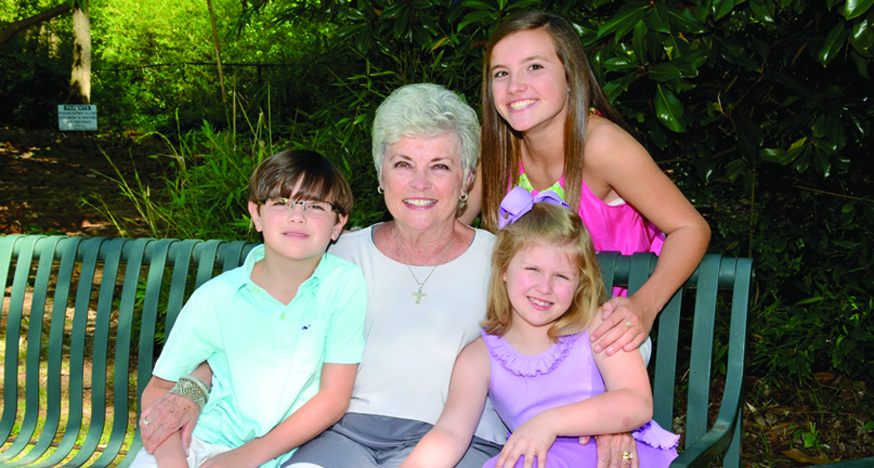
At this year’s annual Motherwalk, presented by the Norma Livingston Ovarian Cancer Foundation May 9, Fitzpatrick will celebrate 37 years as a cancer survivor.
Her battle with cancer started when she was 31. Fitzpatrick began receiving chemo and radiation treatments, sometimes bringing along her daughter, Paige, then 2 years old, and her son, Bebo, who was 6.
“It was hard,” Fitzpatrick said. “It takes a lot of energy to take care of children, and you don’t have that energy.”
She said she would occasionally bring her children to the hospital, where they would sit in a separate room while she received treatment, but usually received help from her parents, her in-laws and an especially wonderful next-door neighbor.
While raising two children, Fitzpatrick beat cancer and would do so again a decade later.
“If you have breast cancer, you are prone to have breast cancer again, and that often leads to ovarian cancer,” Fitzpatrick said.
And so it did.
Two months after her daughter’s marriage, Fitzpatrick sat down with her to go over post-wedding details.
“She had some money out from all of the people who came to her wedding and was counting it,” Fitzpatrick said. “I could tell something was wrong. So I asked her if the money was going to go toward a new roof for her house. Then she said, ‘No, Mom. I think I’m pregnant.’”
One month after learning she was going to be a grandmother, Fitzpatrick was diagnosed with ovarian cancer. So with a three-dimensional ultrasound photograph of her growing grandchild, she began a third battle with cancer.
“I kept that little picture by my bedside the whole time I was going through the chemo,” Fitzpatrick said. “Eventually — I don’t know if it came back or they didn’t get it all the first time — but the next year in February, on the exact same weekend, I had a reoccurrence.”
Fitzpatrick said that having a grandchild to look forward to was one of the things that kept her going through her third battle and her fourth.
“This last chemo was just awful, but you get through it,” she said. “Life is a process, and you do what you have to do.”
Because of her ongoing struggles with breast and ovarian cancer, Fitzpatrick’s experience as a mother was different from others and shaped the way she and her own children view motherhood, she said.
She said her children never really knew a life with a mother who wasn’t sick, so cancer became a norm in their family. Another norm is her drive to spend as much time with her children and grandchildren as possible.
“(Cancer) changes your perspective in that you want to make sure you’re with them all the time,” Fitzpatrick said. “Even with my grandchildren now, I try to go to every sports event that they have — and they have lots of them. You just want to be with them.”
Fitzpatrick said she can see the same effect taking place as she watched her daughter become a mother — a heightened awareness of death and the call to spend as much time with loved ones as possible.
“I think she probably is a little more aware of how fleeting life is and that the most important thing you have is time,” Fitzpatrick said.
But with the frequent recurrence of the disease comes the standard of Fitzpatrick’s strength and her ability to overcome anything, let alone cancer.
“That’s the way (my children) think of me,” she said. “I always recover, so they think I always will. I’m mom. I can get through anything.”
And she believed she could get through it as well. She said that even though there were times that she felt she wasn’t sure of her own survival, she never let herself believe she couldn’t beat cancer.
Whenever she felt rotten and low, Fitzpatrick said, she would think of her faith, friends and family and find strength.
Years ago, on a trip to Disney World with her children and grandchildren, Fitzpatrick said her husband said something to her daughter that summed up Fitzpatrick’s success as a cancer survivor and mother.
“He said, ‘All she wanted to do was to live to see y’all grow up, and now she’s down the Lazy River with her grandchildren,’” she said.
Fitzpatrick said the most rewarding aspect of motherhood is watching her children grow into happy, healthy adults and start families of their own.
Fitzpatrick’s advice to mothers and all women is to listen to their bodies. She said she was unbelievably lucky to get an early diagnosis, because ovarian cancer is nearly symptomless until it has reached its more advanced stages.
Through her work with the Norma Livingston Ovarian Cancer Foundation, Fitzpatrick hopes to draw more attention to the signs and effects of ovarian cancer.
At the end of the Motherwalk, participants will walk by a display with photographs of more than 60 ovarian cancer victims and survivors, she said.
“When I came on board with Norma Livingston, my thing was that people need to put a face with ovarian cancer,” said Fitzpatrick. “Most people don’t know as many people with ovarian cancer as they do with breast cancer.”
Motherwalk starts at 8 a.m. May 9 at Homewood Central Park. Registration for the 5K run/walk is $35. For more information, visit www.motherwalk.com/race-info.php.