By Kaitlin Candelaria
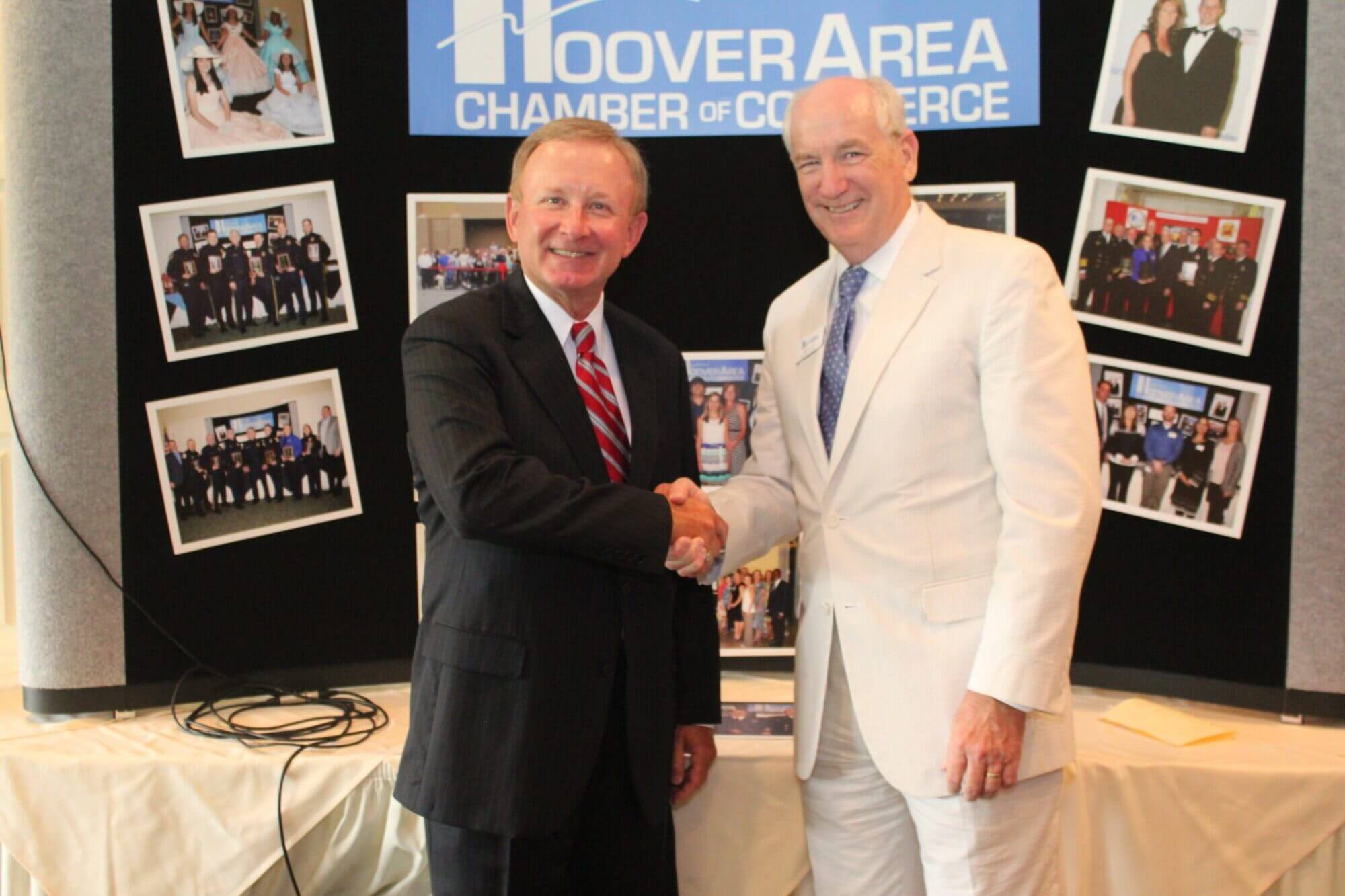
Mike Royer brought on laughter and tears at this month’s Hoover Chamber Luncheon, at which he was the featured speaker.
Royer, a prolific Birmingham newscaster, left his position at NBC 13 in June. He is now honoring the six-month no-compete clause of his contract, during which he is fulfilling speaking engagements. Although Royer has said not to rule him out of television completely, he also warned the audience not to assume he would come back.
“Lately, I’ve been finding several things to do that maybe don’t make as much money as a news anchor makes, but maybe enough to do those things and to do some significant things and do some things for no money at all just because it’s a good thing to do,” Royer said. “Forty years of television may be enough for me and enough for viewers, too.”
The theme of significance presented itself throughout his speech. He recounted some of his more memorable interviewees, including former President Jimmy Carter and Paul Tibbets, a pilot of the Enola Gay plane, which dropped the Little Boy atomic bomb on Hiroshima during World War II. Royer said that, although he would not trade interviews like that for anything, those weren’t really the ones that made a big difference in his life.
“The people who challenged me and touched me the most weren’t the celebrities,” Royer said. “I met people while doing those feature stories who changed me and challenged me and ultimately made me think better and think more about other people and their needs.”
The feature stories Royer referred to were part of his “Spirit of Alabama” program, which aired for almost 20 years on NBC 13. However, when the channel changed hands in January, all features, including Royer’s program ,were cut.
“The people at my channel are not bad people and they’re trying to do what’s best for that station,” Royer said. “And I sound a little old and fuddy-duddy when I say we still need to do stories about everyday people. I think once in a while – while the Middle East is on fire and it’s hard to find national politicians you can believe – that we need good stories to remind us that there are a lot of really good people out there doing really good things.”
Royer discussed his last conversation with his close friend, Lou Wheeler, who lost his battle to cancer more than a decade ago. The last thing he asked Royer was whether he knew the difference between success and significance.
“He told me ‘Mike, I want you to think about moving from success to significance,’” Royer said. “Success is easy. What kind of car do you drive? What’s your best vacation? What size is your 401K? That’s success. But Lou reminded me that when you die, there isn’t a word in your obituary about how much money you had saved up or what kind of boat you had. It won’t make the paper. It doesn’t make any difference. That’s success and it’s fine, but maybe, just maybe, there will be something in your obituary about something you did to make life better for someone else.”
Royer received a standing ovation at the end of his speech. ϖ