By Emily Williams
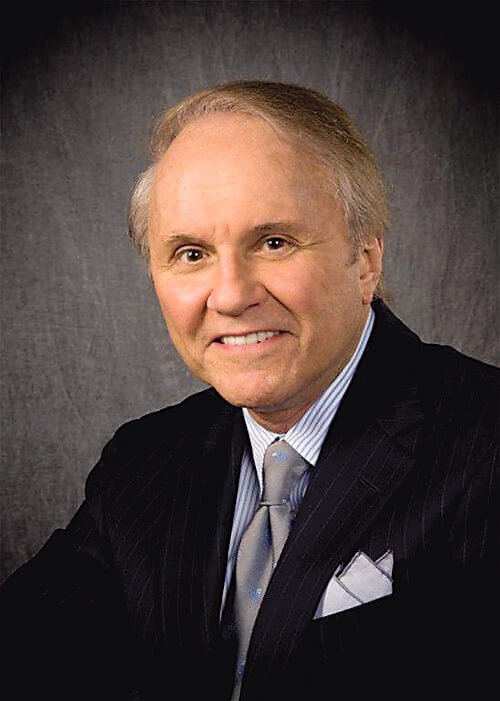
When Dr. Andrew G. Hodges Jr. of Mountain Brook isn’t managing his private psychiatric practice or forensic profiling, he is writing. His most recent book, “Behind Nazi Lines: My Father’s Heroic Quest to Save 149 World War II POWs,” was released Aug. 4.
The non-fiction narrative chronicles the heroic acts of Hodges’ father, Andrew G. Hodges Sr., during his service with the American Red Cross in WWII.
After suffering from the prolonged effects of a football injury, Andrew was unable to join the army. Through the Red Cross, he gained the rank of captain for the 94th Infantry Division and field director of the Red Cross’ European Theater of Operations. Through these positions, Andrew was given the mission of rescuing 149 POWs from a Nazi-occupied camp.
Though the book tackles a subject unrelated to his previous seven books, Hodges said it incorporates his continued studies of the unconscious mind. His previous books include political, religious and forensic works that tackle the subject of “deeper intelligence.”
“The whole of my work is around what we would call natural law or doing the right thing,” Hodges said.
His work on the unconscious mind has led him to the discovery that in all of us there is a built-in moral compass that can be communicated through the stories we tell. Hodges believes that same moral compass can be found in his father’s war stories.
“This book is about somebody doing the courageous, right thing at the right time and operating with a definitive, strong moral compass,” Hodges said. “My father could have at many points turned away from his mission.”
Growing up, Hodges said he was very familiar with his father’s WWII stories of negotiation, risk and trauma. Through those stories and his father’s letters, he was able to add an aspect of drama and create a narrative.
After a documentary was released regarding the POW exchange, three people approached Hodges to publish a book.
Hodges chose to write his father’s story with the help of fellow author Denise George, who teaches book-writing boot camps through Samford’s Beeson Divinity School.
“It took a good year and a half and then we had three or four months of editing back and forth,” Hodges said. “Overall about two years.”
Hodges said that the subconscious mind communicates through moral stories, using them as mechanisms to tell the conscious mind what the best option is. He hopes that when people read his father’s story, they become inspired by the courage of his father and everyone who participated in WWII.
“Stories are how we live our lives,” Hodges said. “We need, today, stories that build courage. When we read them, we draw on those stories and they become a part of us.” ϖ