By Lee Davis
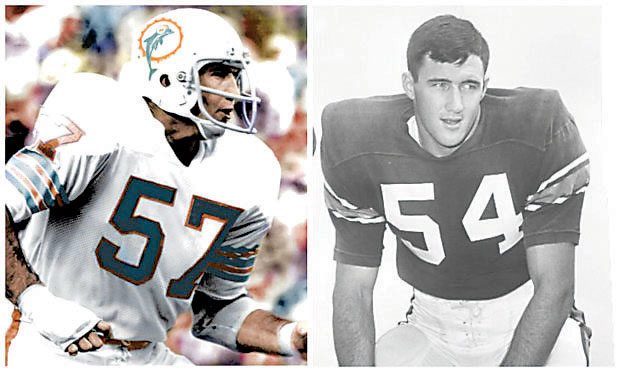
Mike Kolen saw a lot of success on the football field. He played on bowl teams at Auburn University and has two Super Bowl championship rings.
But football was never the most important thing in his life.
As much as he enjoyed playing the game, his faith in God meant much more.
“The Lord has been so good to me, but earthly rewards don’t mean anything compared to having a relationship with Jesus Christ,” Kolen said.
Throughout his life, Kolen has combined faith and football to a positive result.
After a stellar career at Berry High School, Kolen was recruited by Alabama, Georgia and Tennessee in addition to Auburn. Although his football hero was former Crimson Tide All-American Lee Roy Jordan, Kolen chose the Tigers and their legendary coach, Ralph “Shug” Jordan. It proved to be a good decision.
“All four schools that recruited me were great, but I had some family ties to Auburn so it was the place for me,” Kolen recalled. “That’s where I met the Lord and my wife, Nancy.”
Kolen found his faith during his freshman year on the Plains.
“I had always gone to church and done all the right things, but I really didn’t have God in my heart,” Kolen said. “One night I went to see a film by the evangelist Billy Gray. I went back to my dorm room and got on my knees by my bed and accepted Jesus as my personal savior. The decision revolutionized my life and gave me a sense of joy and purpose that I hadn’t had before.”
Soon afterward, Kolen became involved in Auburn’s chapter of the Fellowship of Christian Athletes. “It was great,” he said. “Our FCA was led by coaches and athletes from all sports and was a great way to grow our faith with others.”
As Kolen’s spiritual life developed, his star on the football field was rising, too. Freshmen were ineligible for varsity play in the 1960s, but he made an immediate impression as a sophomore by earning a starting spot at linebacker.
The pundits predicted a losing season for the Tigers in 1967, but Auburn surprised the experts by posting a 6-3 record entering its traditional season finale against Alabama.
Legion Field was a rain-soaked, muddy mess as Auburn held a 3-0 lead in the fourth quarter. The tide turned when quarterback Ken Stabler’s 47-yard touchdown run gave Alabama a 7-3 victory.
 The defeat was a bitter disappointment, but Kolen said the lessons learned helped in the long run.
“As much as losing to Alabama hurt, I really think that game helped us mature as a young team,” Kolen explained. “We learned what it took to win a really big game.”
Auburn came back strong the next year, posting a 7-4 record that included a rout of Arizona in the Sun Bowl. The Tigers’ best outing came in a 31-6 win over highly regarded Miami. Auburn’s defense held the 10th-ranked Hurricanes to minus-85 yards rushing. “If Mike Kolen wasn’t an All-American today, I’ve never seen one,” said Jordan.
“I think we intercepted seven or eight passes in that game,” Kolen said. “(Tiger linebacker) Sonny Ferguson intercepted a pass and ran it back for a touchdown and that play really got us going. It was a great day for Auburn.”
More great days were ahead in Kolen’s senior season of 1969. The addition of two outstanding sophomores – quarterback Pat Sullivan and wide receiver Terry Beasley – had Tiger fans excited. “There was definitely a feeling of optimism and excitement when the season began,” Kolen said. “There was a feeling that we could be something special.”
With Sullivan and Beasley living up to their buildup and the Auburn defense playing at a high level, the Tigers entered the Alabama game with a 7-2 record. For Kolen and his fellow seniors, it was their last chance to defeat the Tide.
“Before the game, we asked Coach Jordan if all the seniors could go out for the coin toss as captains,” Kolen said. “He was all for it. I think it showed Alabama that we weren’t intimidated.”
Kolen may have played his greatest game as a Tiger. His jarring tackle of Tide quarterback Scott Hunter forced a fumble that led to an Auburn touchdown. The game was close at halftime before Auburn put together a strong fourth quarter push to win 49-26.
“It was the greatest thing in the world,” Kolen said. “We knew before the game it was the biggest game we’d ever played in our lives. We didn’t even think about not winning. We knew we were going to do it.”
Kolen earned All-American and All-Southeastern Conference honors and gave much of the credit to Jordan.
“Coach Jordan cared for his player and would do anything to help them,” Kolen said. “He was the epitome of a players’ coach. He also had a brilliant knowledge of the game and wasn’t afraid to surround himself with good people.”
Professional football soon knocked on Kolen’s door as he was drafted in the 12th round by the Miami Dolphins. Miami had been a perennial loser in its early days, but Don Shula was brought in from the Baltimore Colts to rebuild the franchise in Kolen’s rookie season.
“Coach Shula was very similar to Coach Jordan in his insistence on discipline and his understanding of the game,” Kolen said. “He was younger than Coach Jordan, so you might say he was a little more feisty. Coach Shula knew how to put pressure on us and rally the troops so we would be ready for a tough situation in a game. Both Coach Shula and Coach Jordan would have been very successful as CEOs for a business.”
Kolen vividly remembers the first team meeting with Shula.
“He came in without saying a word,” Kolen said. “He went straight to the blackboard and wrote two words: World Champions. Before Coach Shula came, winning four or five games was considered a pretty good year for the Dolphins. He made it clear that the new expectations were going to be high.”
The first training camp was brutal. “We practiced four times a day for five weeks,” Kolen said. We started at 6:30 in the morning and went until 11 at night. Coach Shula made it clear where he wanted to take us.”
Shula’s approach worked quickly. Miami posted a 10-4 record and reached the playoffs for the first time in 1970. The new coach’s emphasis on having a strong defense was a major reason for the turnaround. A year later, the Dolphins were even better, reaching the Super Bowl. The defensive unit was among the best in the league, despite the fact it had few big name stars. Soon a nickname was born.
“We were playing the Dallas Cowboys in the Super Bowl in New Orleans and (Cowboy coach) Tom Landry was having a press conference,” Kolen said. “He was asked a question about our defense and he admitted he couldn’t think of any of our names. After that we were known as the No Name Defense.”
The Cowboys defeated Miami 24-3, but the Dolphins established themselves as a legitimate league powerhouse. In 1972, Kolen would be a part of perhaps the greatest season in NFL history.
“We thought we’d be good, but I don’t think anybody imagined we’d be the first NFL team ever to go undefeated,” Kolen said. “Nobody had an ego and everyone worked together for the good of the team. What truly made that group special was the concept of TEAM – Trust, Enthusiasm, Attitude and Motivation.”
Miami had a few close games in the regular season but completed the schedule with a 14-0 mark. The Dolphins then defeated Cleveland and Pittsburgh in the playoffs and climaxed the season for the ages with a 14-7 win over the Washington Redskins in Super Bowl VII.
The Dolphins won the Super Bowl again the next season with a victory over the Minnesota Vikings. “We probably had a better team but we didn’t go undefeated,” Kolen said. “That shows why it’s so hard to go undefeated at that level. It hasn’t happened since.”
Kolen continued to be one of the NFL’s best linebackers until his retirement after the 1977 season.
In the years that followed, Kolen came back to the Birmingham area, where he was successful in business and became a popular speaker, giving his Christian testimony. He also has worked to help establish FCA chapters at junior high schools and high schools throughout the state.
Kolen is also an author. He just released a motivational book, “The Greatest Team: A Playbook for Champions.” It’s available at local bookstores and online.
“I’ve been very blessed,” Kolen said. “I’ve had the opportunity to be around great people.”
Mike Kolen has been blessed, but with his impact on his community he has also been a blessing.