By Sarah Kuper
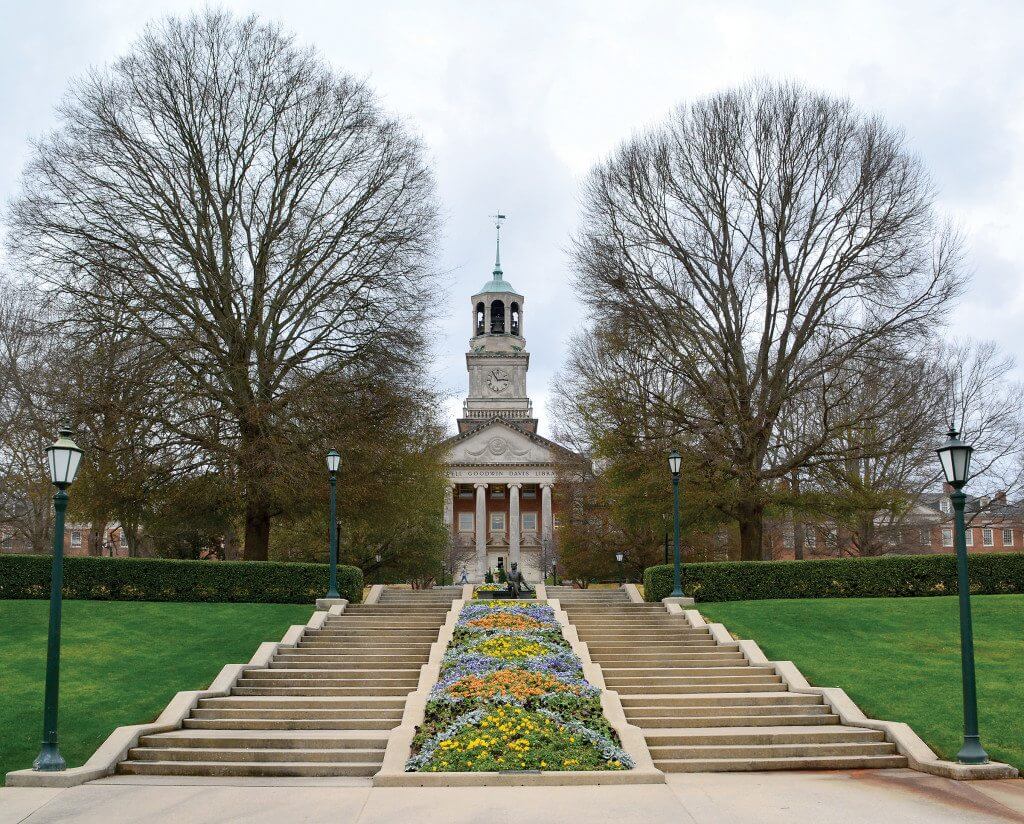
For the first time in more than 50 years, Samford University leaders are assessing the physical state of the campus.
As the College of Health Sciences moves operations to the recently acquired Southern Progress campus next door, senior administration is taking a holistic approach to planning the school’s next 50 years.
Colin Coyne, chief strategy officer at Samford, said a campus master plan is being developed concurrently with a strategic and academic master plan.
“Now is a good time to step back from thinking day-to-day and start thinking decade-to-decade,” he said.
The public had been invited to attend a series of forums to ask questions about the process and to provide guidance to planners.
“Right now, we are just information-gathering. We want to take all the input and boil it down to our best option,” Coyne said.
“We are very proud of the relationship we have with the Homewood and Over the Mountain communities. We want to explore how everyone can benefit from the economic impact of Samford. Homewood has always been very gracious to our students,” he said.
Coyne expected people would come with questions about traffic, noise and lights, but he also expected senior administrators would have to clear up some rumors, like the rumor that Samford wants to acquire the Homewood High School campus across the street.
“As of today there is no conversation with Homewood High School. Our hands are quite full right now with what we have acquired next door,” he said.
Coyne said he wants to quiet any gossip about Samford and the high school because he doesn’t want it to be construed that Samford is influencing any decisions made at Homewood High.
“It’s not even on our radar,” he said.
The acquisition of the Southern Progress property means that space on Samford’s existing campus will open up as the College of Health Sciences moves.
Part of the new master plan will address how to reallocate the newly open space. It also will address building updates and infrastructure changes.
“We want to address accessibility issues and sustainability, plus things like lighting around campus, transportation, managing athletic facilities,” Coyne said.
In fact, Coyne said passersby may not notice many external changes for a few years.
While the campus size may be expanding, administrators do not intend to drastically increase enrollment.
“We will not be lowering our admission standards or walking away from our Christian foundation. Any growth will be natural and careful,” Coyne said.
Samford University has seen a steady increase in enrollment in the past few years, but Coyne said that has been intelligently managed growth. Current enrollment is 4,758.
“We are not going to turn on the spigot and double enrollment overnight,” he said.
Coyne emphasized that the university wants to create a campus plan that will benefit students and the surrounding neighborhoods.
“We don’t get many opportunities to do a master reset on a campus and we want to do it in a way that attracts positive attention to the area,” he said.
A campus planning firm out of Massachusetts, Dober Lidsky Mathey, along with Davis Architects of Birmingham will be leading the update.
Administrators expect to have a comprehensive report from DLM and Davis Architects by this summer, with a more complete plan to come in the fall.
The last scheduled community forum is Feb. 25, 4:30-6 p.m., at Sullivan-Cooney Family Field House on campus.