By Sarah Kuper
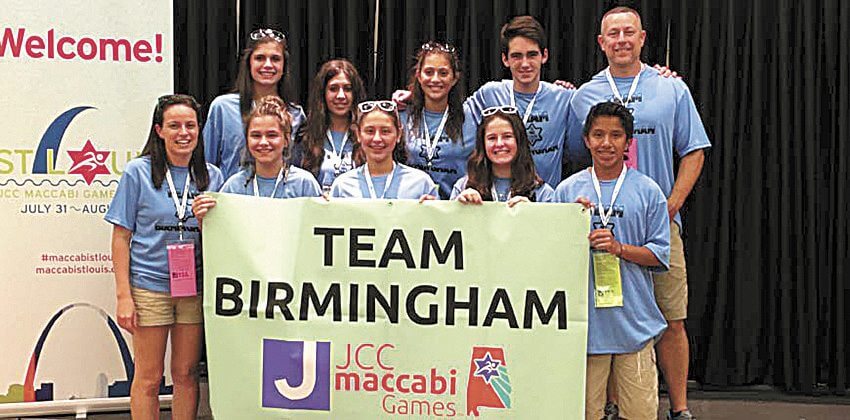
This month, about 800 teen athletes will journey to Birmingham to compete in the 2017 Maccabi Games at the Levite Jewish Community Center.
The Maccabi Games happen every year in different locations. Teams of teenagers from Jewish Community Centers around the country gather to compete in land and water sports. Athletes stay with host families from the com- munity and go on excursions to learn more about the host city.
LJCC Maccabi Games Director Spencer Lynch said the process to be chosen as a host city is extensive, and usually the games are in large cities such as Los Angeles or Atlanta. Birmingham is the smallest city to host the event in its 35-year history.
Lynch said he is pleased Birmingham was chosen both to show off what the city has to offer now and to teach about the city’s heritage.
“Ninety-five percent of the teens coming would have no other reason to come to Birmingham if it wasn’t for the Maccabi Games,” Lynch said. “We can showcase how vibrant our city is as well as educate on what the city was, especially with regard to the civil rights movement.”
While participants can expect some tough competition, Lynch said the crux of the event is the chance to build relationships with other Jewish teenagers and families.
One of the many logistical tasks of orchestrating the games is finding enough host families for the athletes.
Lynch said he is pleased with how the community enthusiastically rose to the challenge.
“We currently have 800 beds spread across 245 host families. We expect more will offer up in the next days,” he said.
Lynch said it isn’t just the Birmingham Jewish community that is working to put on the games. While host families are generally Jewish households, many members of other faith organizations and communities have asked how they can contribute through volunteering, coaching or even just attending.
$3 Million Economic Impact
Maccabi Games co-chair Bruce Sokol estimated the economic impact of the games will approach $3 million.
“While the kids are staying in local homes, parents, coaches and others will stay on the local economy. They’ll be staying in hotels, eating at restaurants and shopping at local stores.”
The teens will take excursions to the Birmingham Civil Rights Institute and other cultural attractions, and Sokol expects parents will do the same in their free time.
In addition to the 800 or so teen athletes, organizers estimate 1,500 adults will bring revenue to the Over the Mountain area.
Sokol praised the business community and the Mountain Brook Chamber of Commerce for supporting the event.
“They have been extremely welcoming and helpful. Visitors will see the true meaning of Southern hospitality,” Sokol said.
Lynch adds that local law enforcement agencies have been able to ease some fears related to the security of the events, especially after several bomb threats were made to the center earlier this year.
“We were concerned because here we were two years into planning, and in the middle of it all we had bomb threats,” Lynch said.
With the expertise of local, state and even national law enforcement agencies, Lynch feels like his team can focus on creating a fun and meaningful experience for athletes without worrying about security threats.
That said, for security purposes the LJCC is not releasing specific details of events to a wider audience until closer to the games.
Lynch said his ultimate goals for the Maccabi Games are to facilitate relationships among the athletes, to see the teens engage with their faith and to show the world all Birmingham has to offer.
Sokol, who has been active in the local Jewish community all his life, said that, although hosting the games is a big undertaking for a city Birmingham’s size, he doesn’t doubt the impact it will have on participants and the community.
“When I was asked to co-chair, I was overwhelmed with the thought that it is the most important event to happen in the Jewish community in my lifetime,” he said.
The games begin July 30.
For more information about the event, visit jccmaccabibham.org.