By Anne Ruisi
Two years of mysterious symptoms that began with stomach pain eluded diagnosis until November 2022, when Kathy Polk’s doctors figured out the cause of her illness: stage 3 pancreatic cancer.
The Hoover resident and her family were stunned as they hadn’t recognized the symptoms of the often-deadly disease, such as persistent bloat, pain in the upper abdomen and back, sudden weight loss and jaundice of the skin and whites of the eyes.
“Pancreatic cancer is extremely difficult to find. If you have vague symptoms, you need to pursue it,” she said. “Early detection affords the best opportunity for a cure.”
A year later – following a physically punishing 12 rounds of chemotherapy and a nine-hour surgery but with tremendous support from her family, friends and even strangers – Polk is cancer-free.
“It’s something I’ll forever be grateful for,” she said.
Now, Polk is working to increase pancreatic cancer awareness and help people recognize the signs, especially this month, which is Pancreatic Cancer Awareness Month. World Pancreatic Cancer Day is Nov. 16.
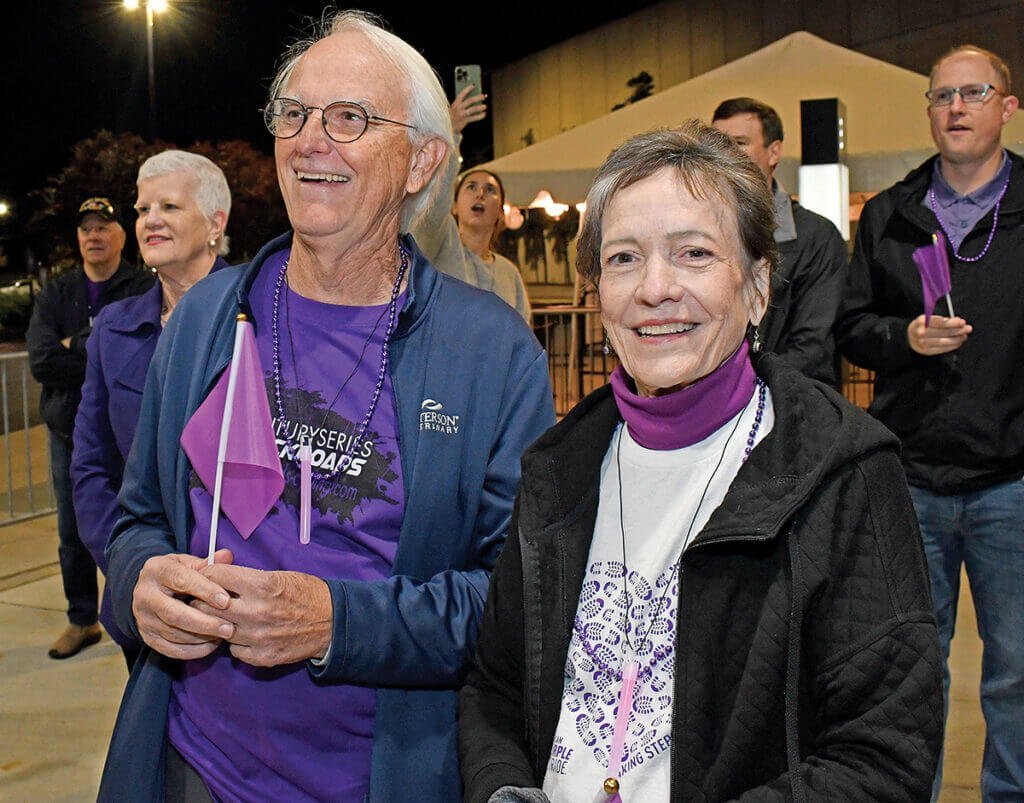
She joined members and supporters of the Alabama affiliate of the nonprofit Pancreatic Cancer Action Network, or PanCAN, at PurpleLight, an awareness event held outside Legacy Arena on Nov. 10.
Purple is the color to signify the fight against pancreatic cancer, a disease that claims 85% of patients because of late detection, according to PanCAN.
PanCAN funds research, conducts community outreach and advocates for increased federal research funding. It also provides patient and caregiver support, services Polk said contributed greatly to her recovery.
Early Tests Show Nothing
Her cancer journey began in 2020 with occasional, unexplained stomach pain and bloat.
“I felt like I had a basketball in my gut for months,” she said.
Polk saw her gastroenterologist in October, and he ordered an abdominal ultrasound in January, followed by an upper GI and colonoscopy in early February 2021. But nothing unusual was found. The doctor recommended she get back in touch in six weeks if the symptoms persisted.
Polk said she did not follow through.
“I chalked it up to stress from COVID and the political upheaval after the 2020 election,” she said.
The symptoms continued off and on for another 20 months, but she kept putting off getting them checked again for several months while she took care of one of her sisters with a disability similar to Parkinson’s Disease. Polk said she couldn’t take the time for doctor appointments for herself.
Finally, at the end of September 2022, she suffered from excruciating mid-back pain all night followed by the onset of jaundice on Oct 1, a Saturday. On Monday, she had an ultrasound that found nothing. A week later, she had an MRI as the jaundice worsened.
The MRI detected a large tumor on the head of her pancreas. It was so large that it completely blocked the main bile duct. A biopsy confirmed cancer and a stent was placed in the bile duct, which cleared up the jaundice.
“Ignoring symptoms is not the intelligent approach to preserving one’s life when dealing with cancer,” Polk said, noting there is a history of cancer in her family and her father died from colon cancer.
Next, Polk saw Dr. John B. Rose III, a pancreatic cancer surgeon at the University of Alabama at Birmingham. Her treatment plan called for 10 rounds of chemo, followed by Whipple surgery, a complicated, 9-hour abdominal procedure that included removal of the tumor and parts of her digestive tract and the resectioning of many tiny pancreas blood vessels by vascular surgeon Dr. Adam Beck.
Two more rounds of chemo followed surgery.
Recovery has been challenging, including dealing with nausea and fatigue after each round of chemo and a severely upset digestive process for five months after surgery. A healthy lifestyle is crucial to recovery, and Polk said she “got religious about my diet and exercise regime.”
“I’ve got a whole little gym downstairs in my basement,” she said.
While recent tests have shown Polk is cancer-free, it doesn’t mean she’s cured. Regular doctor visits, blood tests and imaging scans are now a regular part of life. A cancer patient is considered cured after there is no sign of cancer on blood tests and scans for five years or more.
“I highly urge everyone to be aware of cancer symptoms, all available cancer tests and cancer biomarker blood tests that might apply to symptoms, and your family cancer history,” Polk said. “Advocate for yourself until you get answers.”
For more information or to get a Pancreatic Cancer Awareness Month Toolkit, contact Snapper Freeman, PanCAN’s community relationship manager at 865-748-6309 or [email protected]