By D.T. Carmichael II
You may have heard of Murphy’s Law, which states that anything that can go wrong will go wrong. It’s a reductionist way of saying that things will break. Did you know it has corollaries? For example: nothing is as easy as it looks, everything takes longer than you think, left to themselves things go from bad to worse, and nothing is foolproof—because fools are so ingenious.
We set off for South America in the summer of 2024 because, the winter before, I called Grant and told him, “I’m going to South America, but I’m not going unless you go with me.”
We rendezvoused in Peru with a half-worked plan, a bare-bones budget and every intention of figuring it out as we went. I had already been there for a month, learning Spanish, gathering contacts and making a plan. It must be said that we were not looking for the adventure of a lifetime, nor were we searching for El Dorado. We wanted experience—in essence, we wanted a test worth taking.
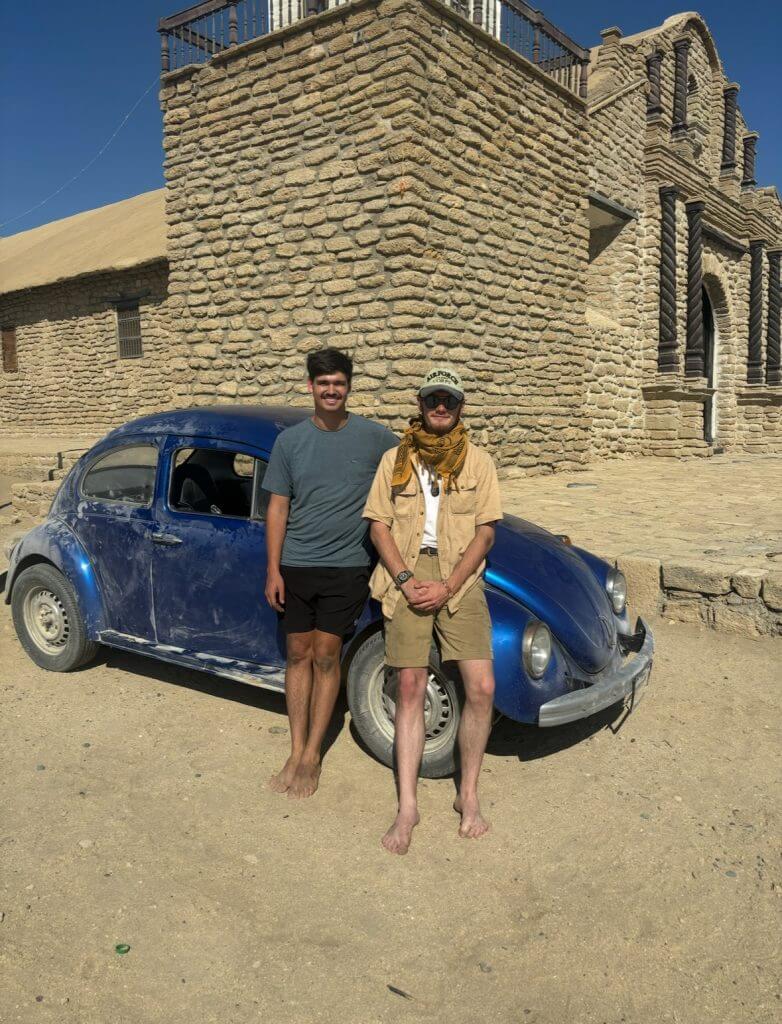
A hostel in Lima, Peru, was our headquarters, and we searched for three days for the right car. Confined by a tight budget, we bought a beautiful blue Volkswagen Beetle we named Judith. The locals simply call the car an Escarabajo. It took another two days to cut the seats lower so we could sit properly, buy spare parts, change fluids and give ourselves the go-ahead to begin our travels. Our plan: travel north via the Pan-American Highway to Ecuador and rendezvous with a small team of missionaries.
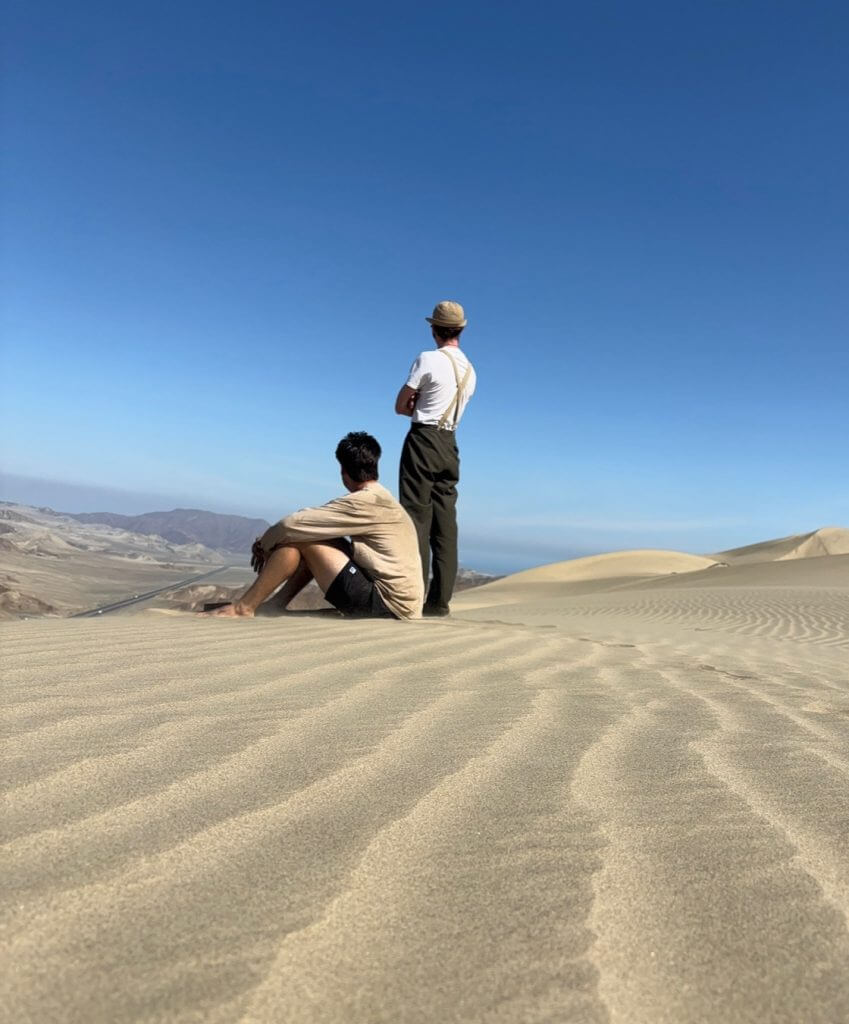
The first two and a half days were seamless. We encountered minor issues, but nothing Grant couldn’t fix. The writing was on the wall when we heard a slight ticking sound in the motor on day three. We pulled over for Grant to check it out, and I noticed the skeleton of a horse. I kicked it with cynical irony, knowing at that point we were kicking a dead horse. A system—in this case, an engine—is designed to consume its resources at a certain rate. Ours consumed itself when the oil pump failed, frying the motor and leaving us stranded in the Sechura Desert.
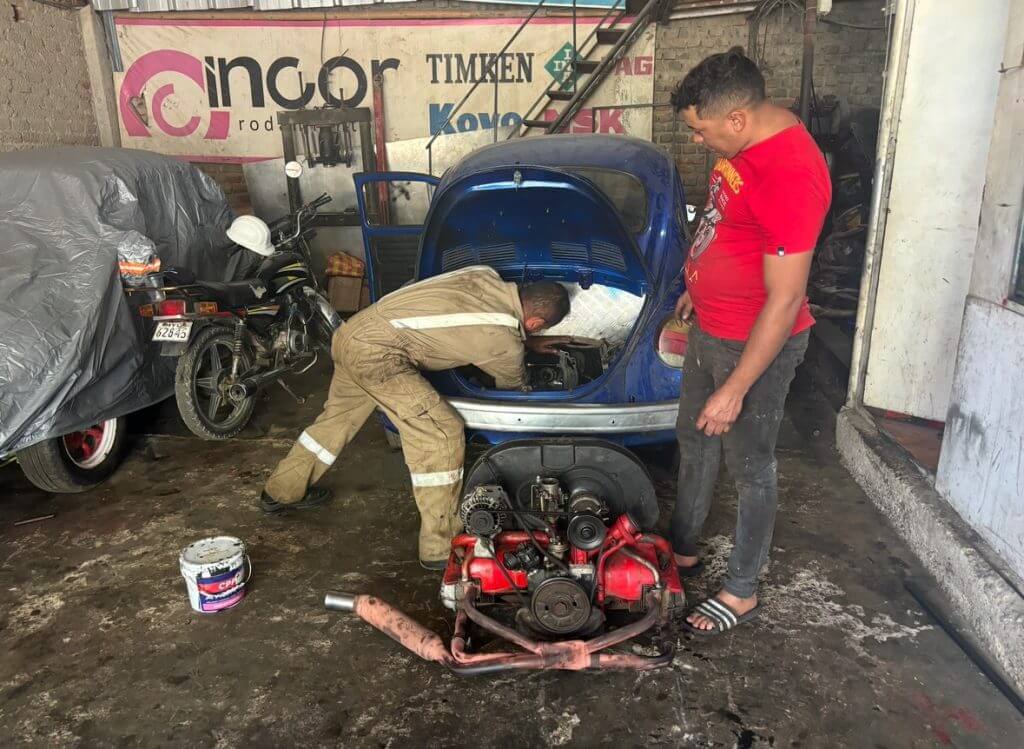
It took eight hours to haggle for a tow—and that’s a generous description for a four-foot strap pulled by a sedan. They brought us to the closest city, where we would remain “washed up” for a week. The day after our catastrophe, the motor was disassembled and diagnosed. We wanted to leave soon, and we attempted to leave sooner—and, in all fairness, we should have. It is said that a mechanic’s job is to combat the continual increase of entropy during the operational lifetime of equipment. The life of our first motor had come to an end, and the mechanics replaced it with a new one. It’s a sad time when that’s the best option.
It was a severe blow to our budget, but we wore smiles at the prospect of still making it to Ecuador. We left after four days of waiting and returned that same night with our tails between our legs. In the foothills, just before the border, Judith began losing power—again. We barely made it back. On the bright side, for the price of one new motor, we got two. The mechanics were at a loss for words when they discovered the replacement engine was losing compression. In one week, they had replaced two motors for two gringos in the desert. After that week, we were nearly broke, nearly out of time and unsure what to do next.
We decided to head west, and this proved to be the most dangerous route we’d ever taken. One-lane roads with blind corners in the Peruvian mountains, goats in the street, buses practicing combative driving on mountainside roads without railings—and Judith continued to fight us the whole way up and the whole way down.
We eventually reached a high-jungle city that didn’t seem to sleep until sunrise. The morning was dreary. There we were—waking up in a muggy jungle hotel room. An all-night cockfighting ring, a nightclub and barking dogs had allowed for zero sleep. The staff told us there were two beds; we found only one. The other guests didn’t appear to be travelers at all. The exotically dressed women in the hallways and the men who were decidedly not the social type made it clear we were in no ordinary hotel.
Our vehicle, which had already stranded us twice, had broken down once again. We were in a high-jungle city only days away from our flight home. Zero sleep, a broken car and stranded in South America—again. It occurred to me then that we were not the first two guys to hit rock bottom in a South American brothel.
The constant trouble distilled the excitement out of us until all that remained was the will to get home. What began as our worst day soon became our best. While broken down, we met a wonderful family who took us in. That same day, Grant got Judith running properly, and it was smooth sailing after that. We made it to the jungle and rested for a night. The journey back to Lima was long, but we caught our flight.
Eighteen months later, I returned to sell the car—meeting familiar faces, seeing familiar places and reflecting on journeys of yesteryear. In hindsight, it was an exercise in teamwork, perseverance and learning what we needed by not having it. It was an extreme gesture of adventure, but it forged a formidable team and planted the seeds for a lifetime of driving stories. The trip was deemed Desert Rats, Pt. 1. It was intended as a pilot episode—dipping our toes into the unknown and seeing how we would adapt.
During this round, Murphy’s Law was right. One finds out after the fact what one should have known to begin with. Intelligence may just be the fine-tuning of stupidity through experience, and we’re all pretty stupid until proven otherwise. And all of that is just a complicated way to say: explore like your life depends on it.