By Lee Hurley
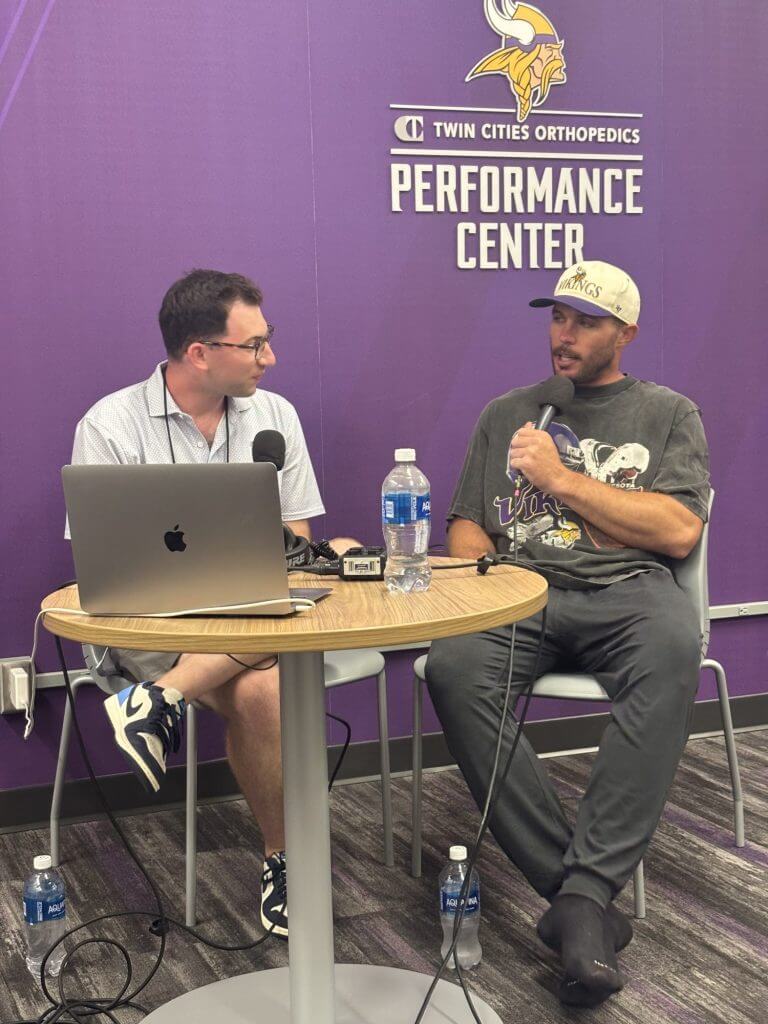
An Army Colonel once said to me, “Son, there are two kinds of people in this world. Those who know what they want and those who don’t.” I was scared he might ask me which one I was, so I nodded quickly, but it reminded me of the joke, “I used to be indecisive, but now I’m not so sure.” Indecisive does not apply to Alec Lewis. The Mountain Brook native knew what he wanted by high school, and as a result, today at 29, he is the New York Times beat writer for the Minnesota Vikings. If one were to rank his literary sports significance like Forbes ranks its richest people, Lewis is a multi-billionaire falling somewhere between Peter Thiel and Jerry Jones. Anyway, I interviewed the writer back in May, and good thing because now, with preseason looming, Lewis is busier than a one-armed paper hanger. In addition to his articles, the wordsmith hosts a podcast called The Alec Lewis Show. It’s casual and entertaining and shows how comfortable Lewis is in his own skin.
OTMJ: Bama or Auburn?
Lewis: My dad’s a big Bama fan, so I grew up an Alabama fan…I remember the Kenneth Darby running back times, the Glen Coffee days, the Mike Shula experience. And I remember when we went to an Alabama-Duke game—it must have been 2005 or 2006. My dad’s car got towed, so I remember that—I don’t remember the game, but I remember the towing.
How did you become a sportswriter so early? That’s not your typical Mountain Brook pursuit.
I was in ninth grade at junior high, and I remember going to this meeting with a counselor to set my schedule for high school, and I needed an elective. At the top of the page it said, “What do you want to do?” I wrote, “I want to work in sports.” The counselor said, “Why don’t you write for the school newspaper?” My immediate reaction was, “No way, I don’t like writing…and like, that’s not my crowd.” And she said, “I’m going to sign you up anyway. I get to high school, and a lot of my friends are on the basketball team, so I would write down a list of questions then walk over to Coach McMillan’s office, and he would answer them. He and Coach Yeager just let me hang around and ask questions. I started posting updates of the games on social media, and that led to meeting Jeff Sentell with the Birmingham News who said, “Why don’t you write for us?” I’d take my car and go to towns like Center Point or Pinson Valley on a Friday night to cover games. I’d write the story in the car, scoot my seat back, type it up on my laptop and send it in. They paid me $50 a story, which for an 11th grader was incredible. That was the link, I’d say, to realizing, okay, this is something maybe I could do.
Then Missouri for college. Why?
I got coffee at Starbucks in Cahaba Heights with Lars Anderson, who’s written multiple books for Sports Illustrated and taught at Alabama. He said, “If you want to do this, going to the University of Missouri is a no-brainer—not just because of what they teach, but the number of alumni in journalism gives you connections and relationships and people who can vouch for you.” Once I got to Missouri, it evolved a little bit from just loving the game and loving getting to meet people to loving the craft of writing. The writing, which I initially rejected as an idea, grew into this puzzle that I love to try and solve.
How did you get from Mizzou to the New York Times?
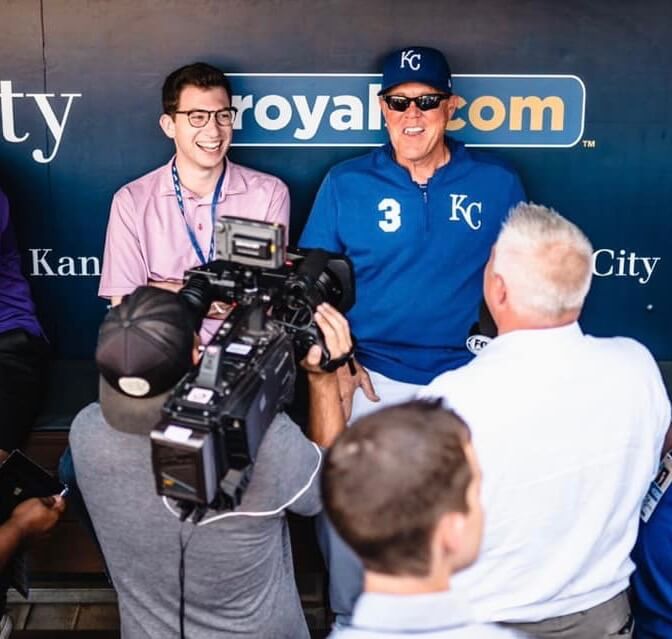
After my junior year, I got a call from an editor at The Athletic (owned by the New York Times)—they wanted someone covering Missouri football on a temporary basis, paid per story. This was an opportunity to get in the door, but Missouri was terrible that fall—my stories didn’t perform well at all. I thought I’d set myself up for failure, but in March of my senior year, I got a call from an Athletic editor asking what I thought about Major League Baseball. Anybody who knew me at the time knew I wasn’t a big fan of baseball—I thought it was boring. But when you get a call from The Athletic, you roll with it. I flew to spring training in Arizona and missed a week of school. I grew to love baseball and the availability within it to tell cool stories. I covered the Royals from 2019 to 2022. One day I reached out to an editor about NFL openings, and he said they had one in Minnesota. Moving north was never in my plan, but the Vikings had just hired a new GM and head coach, so I could come in without prior relationships and develop my own. That was the fall of 2022—my dad flew up to Missouri, we got a U-Haul and moved to Minnesota without knowing anybody.
So, Minneapolis is now home. Are you ever cold?
The winters are not overhyped. From October to April, you’re not going to be outside a lot, and you’re going to need many layers, and you’ll be driving in it regardless. I tell people I live in the North Pole—my friends are tired of me sending pictures of snow. But the summers are phenomenal—75 degrees every day in May and June, feels like LA. It’s worth it, and then winter comes back, and it’s not worth it again. And this is probably a nod to my mother, who’s written cookbooks, but I’ve always loved food. I did not expect Minneapolis and St. Paul to have such a good food scene, but it really does. It’s been a nice component of living here.
Is this your future?
My personal life here is in a good spot—I’m dating a girl, and I have friends, so it’s good. My mind is focused on the day-to-day, wanting to do this at the highest level possible. I have a book idea I’ve been pursuing, and there’s more within the multimedia space I have my eye on, but I try not to force that stuff. When it comes, it will come, and all I can do is work my ass off to put myself in the best position.
Is Thomas Wolfe right that you can’t go home again?
Mountain Brook shaped me to be the person I am, from the city itself to the teachers, the parents, the friends. My journey has given me perspective on where I come from and why I’m grateful to be from where I am. I’ve seen a lot of different iterations of how the world has evolved, what people want, how people feel. I’m willing to listen and learn as much as I possibly can, knowing I come from a very fortunate place.