By Cathy DeLozier Photos by Jordan Wald and Courtesy RMT
“Bit by bit
Putting it together
Piece by piece—
Only way to make a work of art
Every moment makes a contribution
Every little detail plays a part
Having just the vision’s no solution
Everything depends on execution
Putting it together
That’s what counts!”
—Stephen Sondheim

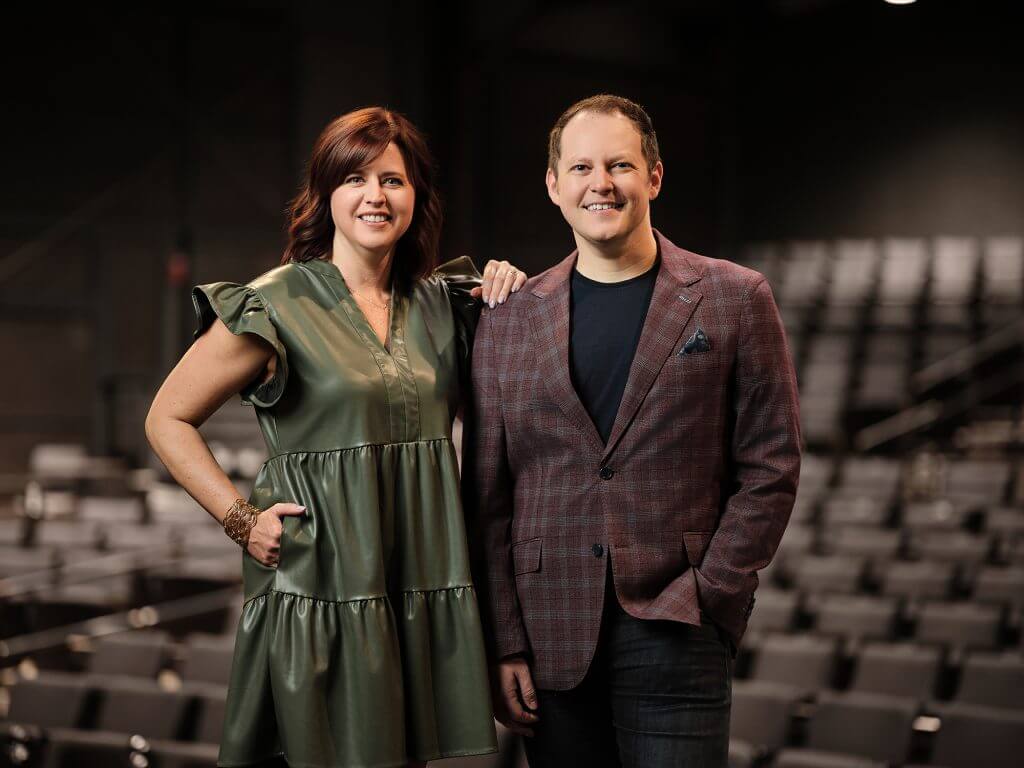
As one of the musical numbers sung during Red Mountain Theatre’s (RMT) Gala performance in October, these lyrics perfectly capture the work and thousands of decisions and details necessary to make a musical theatre production come to fruition. The performance of “The Journey Begins,” was conceived, directed, choreographed and performed by Singh Artistic Director Roy Lightner and written by Anastas Varinos. Accompanied by the RMT Performing Ensembles and top Birmingham actors, the show turned a spotlight, both literally and figuratively, on the dream of an idea becoming a reality and everything required along the way to make that happen. Executive Director Jennifer Jaquess and Lightner were excited to show off the behind-the-scenes talent as the focal point of this year’s Gala. “Theatre is a team sport,” says Jaquess.
Behind the stage at Red Mountain Theatre a series of lighting, sound, dressing and storage rooms, workshops, and a warehouse of wardrobe and props are manned by a talented and dedicated team of professionals possessing highly specialized skill sets. “We start work at least eight months ahead of each show,” says Marketing Manager Terri Osborne. “We have a network of scenic designers across the country that we’ve worked with before, and then we bring as much in-house as possible. We like the collaboration of seeing the idea coming together, how it’s working in our space and making changes as necessary.”
For the upcoming production of The Wiz in February 2026, the final design was approved in early November. Technical director Bryan Hitchcock then figured out how to build the sets and scenery and made technical drawings for the carpenters to know exact measurements and how to put everything together.
The scene shop is fully equipped with every imaginable power tool for woodworking and welding and can build anything up to 17 feet tall, for stage clearance. Hitchcock and his team of three full-time carpenters build sturdy scenery and furniture-grade props to withstand the wear and tear of scene changes and constant use. Sometimes overhires are brought in for particularly busy times or for highly specialized skills. “This team is incredible and everything they make is ready for the rigors of the stage. They built an entire tree—a full-sized, mature pecan for The Color Purple—using some interesting new techniques. They built the skeleton and laboriously placed a special fabric that could be heat molded around the trunk and branches to create bark,” Osborne adds.
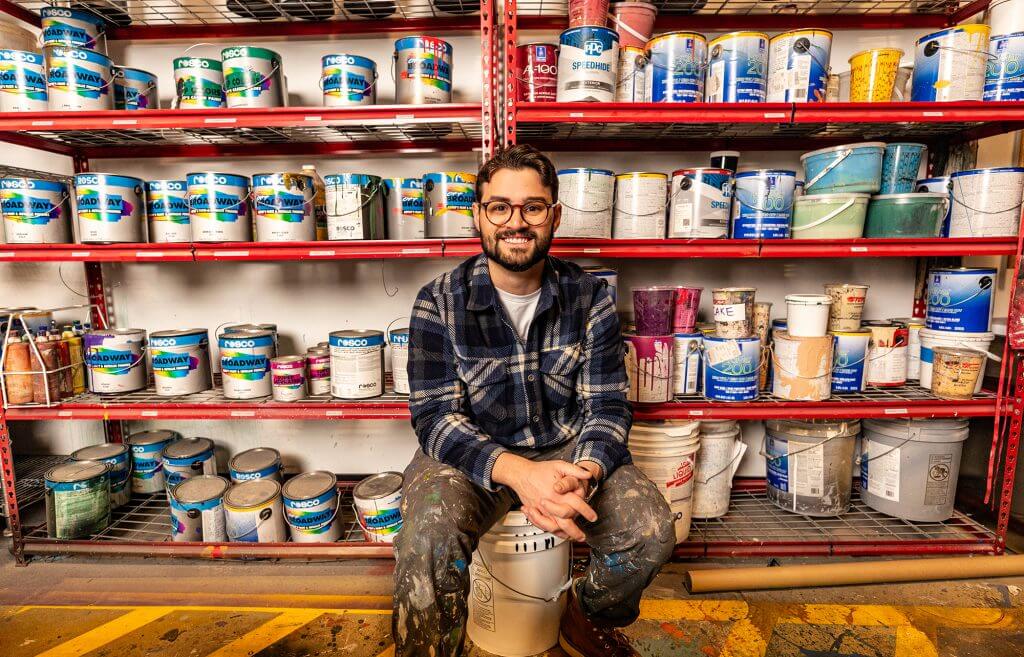
Scenic Charge Artist C. J. Romano is a one-man shop. “I’m responsible for painting all the sets and scenery that the scene shop produces,” he says. “I receive technical drawings called paint elevations from the scenic designer, so I know exactly what they want the set to look like. I use special paint with pigment that is far more saturated and specifically made for sets. I mix the paints myself and add water, but the color saturation remains true. We typically have an eight-week build schedule from shop to stage.”
Production Manager Jenn Luck says, “About a third of the time we’re able to keep scenery pieces and reuse them or repaint them after a show. We’re also starting to have relationships with other theaters who will either rent or buy them, which will transfer as complete sets. We try to avoid just throwing away our used sets and recycle as much as possible. It’s an issue the industry is confronting right now, so we’re doing our part.”
Resident Lighting Designer Lew Williams and Lead Electrician MaK Eddins then pick up the baton. They’ll work with the scenic designer to make sure the scenery, stage and cast have proper lighting throughout the production. Osborne adds, “For every show, there are specific new requirements or something we’re experimenting with. Most of our lights live full-time in the ceiling above the stage so they can be moved at a moment’s notice.”
Throughout the hallways of dressing rooms and props backstage, there are speakers in the ceiling broadcasting live from the stage so performers and crew can time their entrances accurately. A team of three audiovisual experts ensure the sound of the music, as well as the cast and special effects, are heard clearly and at the appropriate volume. They have a fully equipped recording studio where they can make sweeteners, pre-recorded audio tracks that run in the background to enhance vocals and sound effects. “Our hope is that we’ll get it up and running for rentals such as podcasts and voiceovers,” says Osborne.
Thousands of wardrobe pieces—clothing, wigs, hats, shoes, jewelry and other accessories—are housed backstage and in the massive on-site warehouse on floor-to-ceiling double-hung racks. Every piece has been assigned a QR or barcode that has been computer inventoried and cross-referenced to make locating specific articles, such as a 48-inch long, size 6, pink poodle skirt, easy and efficient.
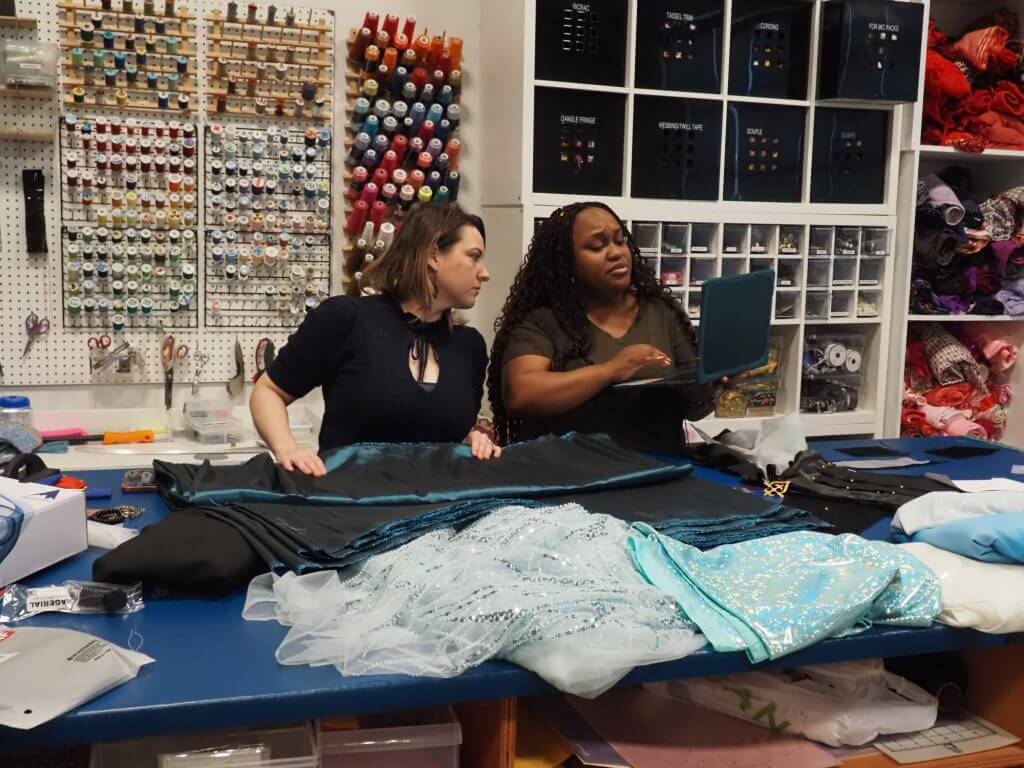
Four full-time staff make costumes for each show, including wigs and hats. Osborne says, “We will purchase pieces that can be altered, or we’ll create new pieces or we’ll recycle. We also take donations and sometimes hunt thrift stores for what we need. One of the issues we grapple with is that almost every role has an understudy, and artists are hired for their voice and talent. Because they usually are not the same size, we must have two custom-fit, tailored costumes to be prepared.” Costumes also must be cleaned between each show, which can be up to eight in one week. There are eight washer and dryer units backstage.
Sewing each piece with a machine and/or by hand, Costume Technician Mary Burley says, “We generally have one to two fittings per person. If we’re making something from scratch, we’ll typically sew a muslin pattern for the first fitting to get proportions and measurements and adjust accordingly. Another fitting is needed for the base, then we’ll proceed to the decorative trim and embellishments. For our production of Six: Teen Edition we had a lot of weird huge skirts, so we had rehearsal versions for the artists to use before the technical rehearsals, so they were more familiar with how to move in them before the show.”
Another key aspect of movement is the shoes the artists wear. Not only do they have to be appropriate for the costume, they must also be comfortable and allow artists to dance. Improvising boots and footwear for inanimate-object costumes can be particularly challenging.
Props, also known as “movables,” are small, portable objects that actors handle that are not part of the set, costumes or scenery. Props Supervisor Allie Nichols deftly makes whatever is necessary for each production. “I grew up sewing and crafting with my mother. And now I get to do arts and crafts everyday at my job,” she says. From adding fleece to a sheep, folding book pages to make a sculptural backdrop or adding frosted plexiglass under Jesus’ manger for the upcoming Holiday Spectacular, she makes sure the props are ready to enhance the production. “The frosted panel will make the lights within the manger project a warm glow,” Nichols says.
Jaquess is proud of her team and their accomplishments. “When all the pieces come together—the actors, musicians, lights, sound, costumes, set, props, script, score, choreography, box office, ushers, and audience—the results can take your breath away, even change your life.”
As the Dreamer in The Journey Begins, Roy Lightner spoke these words at the end of the show, “You’ve contributed. You’ve lived. You’ve created art and art answers the questions of what it means to be human.”
For more information about Red Mountain’s education programs, camps and classes and community outreach, go to redmountaintheatre.org.