By Sarah Kuper
Any parent or school administrator knows that one way to get teenagers to sit up and pay attention is to offer free fast food.
At least, that is what leaders at Alabama Possible are hoping will motivate Birmingham high school students to think about their future.
Alabama Possible’s “Cash for College” program is partnering with Taco Bell to give away free meals to the Birmingham city schools senior class with the highest percentage of Free Application for Federal Student Aid completions before the March 1 deadline.
The Cash for College program is an effort to get high school seniors admitted to college to complete and submit the FAFSA.
While the Taco Bell competition is just among Birmingham city schools, Over the Mountain schools are involved in the statewide Cash for College program.
The executive director of Alabama Possible, Kristina Scott, said most students and parents aren’t aware of the financial aid opportunities that are achievable if they simply submit the form.
“Over and over we hear concerns that so many students have the opportunity to go to college but they can’t afford it. Some students are just used to missing out on things,” she said.
Scott said that, through the Pell Grant, federal awards and work-study programs, a student could be eligible for at least $5,800 toward tuition at Alabama two-year and four-year academic and technical schools.
According to the Department of Education, nine out of 10 students who submit a FAFSA enroll in postsecondary education the following fall.
That’s why the Cash for College program is so important, Scott said.
“Last year only 49 percent of Birmingham city schools’ graduating seniors filled out a FAFSA. That needs to improve. It’s a challenge but it is solvable,” she said.
Scott said this is where Alabama Possible needs Over the Mountain community members to get involved.
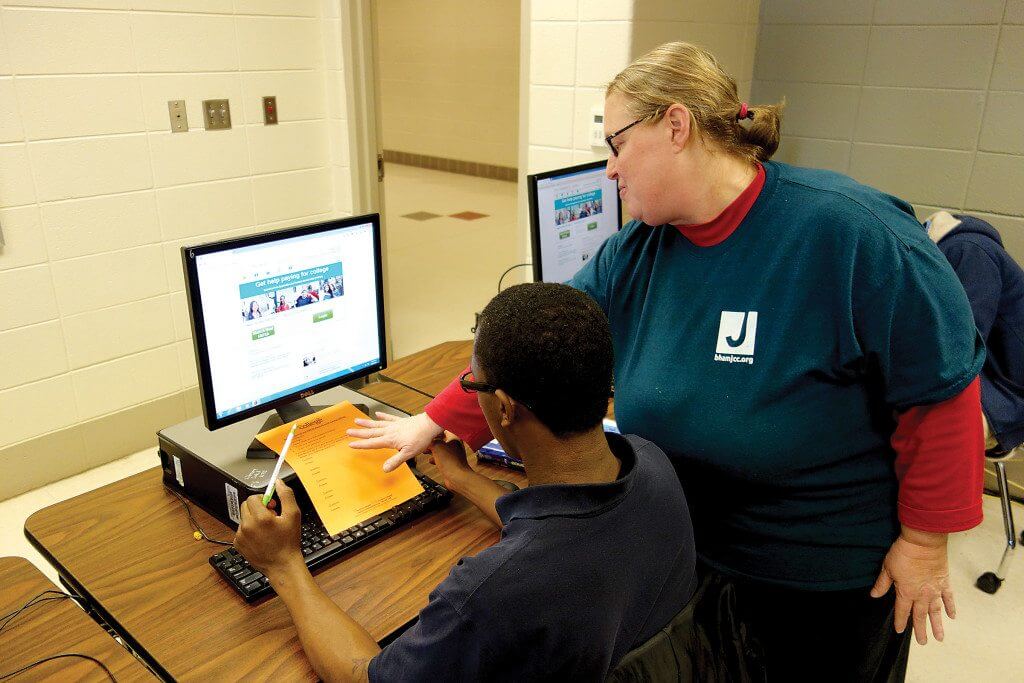
In preparation for the March 1 FAFSA deadline, the Cash for College program will host workshops to help students and their parents complete the application.
Scott is looking for volunteers to learn how the form works and help mentor students trying to submit it.
“The FAFSA is made up of 100 questions and it is more complicated than a tax form. There must be a parent or legal guardian involved. It’s hard,” Scott said.
Already, members of Canterbury United Methodist Church in Mountain Brook are attending training classes and workshops to help students take advantage of financial aid opportunities through the FAFSA.
Leadership Birmingham is also involved.
Scott said area companies such as Blue Cross Blue Shield, Alagasco and Iberia Bank encourage employees to participate as a way to give back to the community.
She said that, while the FAFSA form can be confusing, by going through training and knowing what resources to use, anyone can help.
“We need mentors who can reassure students, ‘We can figure this out.’ If a volunteer has a question they can approach a trainer,” Scott said. “Students sometimes need a push and someone to help them realize, ‘OK. I can do this.'”
Typically, the FAFSA workshops for students are during the school day at the high school, but local YMCAs host them after school hours as well.
Scott said the program isn’t meant to take away responsibility from school guidance counselors.
“The ratio of students to guidance counselors in Birmingham is 425 to 1. They want to be doing this work but they are also handling disciplinary measures and the emotional health of students. We are partnering with schools to provide extra help,” she said.
While the Alabama Department of Education does not provide funding to the program, they are helping coordinate with schools.
Individual and corporate donations fund the program, and Scott said she knows why the Cash for College mission is so important to local corporations.
“In the next few years, 62 percent of Birmingham jobs are going to require higher education. Right now we are at 32 percent,” she said. “Affording college will determine who tomorrow’s workers will be. We need these students to be able to do college-level work.”
The Cash for College program is just one of many Alabama Possible offers to the community.
Through a “near to peer” mentoring program, recent high school graduates volunteer to help high schoolers keep up with college preparatory milestones such as visiting colleges and meeting application deadlines.
Scott said that, while students can still submit a FAFSA after March 1, filing on or before the deadline gives students a better chance at the most possible financial aid.
Alabama Possible’s wider goal is to reduce poverty in Alabama through college access, food initiatives and community involvement and awareness.
According to Alabama Possible, nearly 900,000 people in Alabama live below the poverty line. Their data shows Alabama to be the sixth-poorest state in the nation.
To volunteer and to learn more about Alabama Possible; visit alabamapossible.org/volunteer.