By Lee Hurley
So much attention has been paid over the last two decades to the concept of aging in place. That is, rather than moving our seniors out of their homes into facilities, many new products and services have been created to help seniors age gracefully in the comfort of their own home. And yet, in-home care is not only relevant for our seniors, it’s also relevant for our young children.
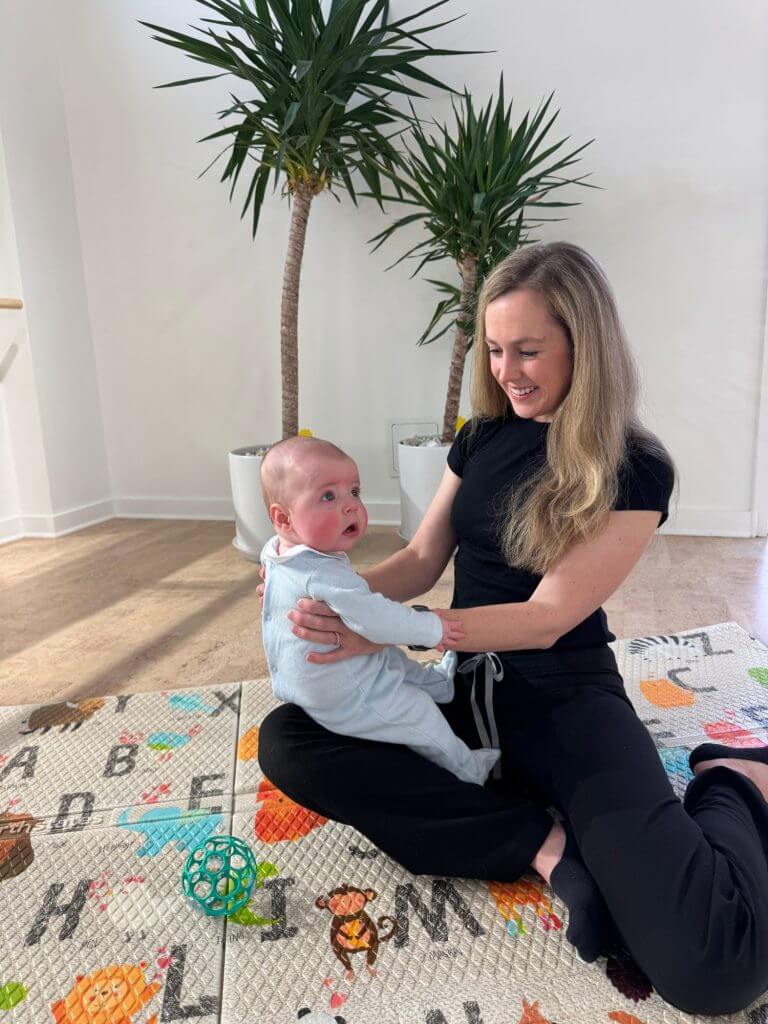
Mountain Brook native Brady Strain saw an opportunity to bring her passion for pediatric therapy into the home, which she did by creating her own company last fall called S.T.E.P.S or Specialized Therapy for Everyday Pediatric Skills. The concept is quite simple, Strain comes to the home to work with infants and young children along with their families to address physical, social, emotional, cognitive and sensory needs.
Brady graduated from the University of Alabama in 2015 concentrating on Food and Nutrition, later getting her Masters in Occupational Therapy (OT) from the University of South Alabama. She began her career at The Emerge School for Autism in Baton Rouge providing OT services in the school system. A career move for her husband Ben brought Brady to Mobile, where she provided OT for infants and children at South Alabama Children’s and Women’s Hospital. In 2022, the couple moved to Birmingham where Brady joined The Bell Center providing OT services for infants and children ages zero to five. And finally she became an entrepreneur moving to her current role. Brady and Ben have two boys, ages three and 18 months.
OTMJ: When you go into the home are you dealing with children who have had a diagnosis of some kind?
Brady Strain: Not necessarily. The majority of my cases are babies who just need a little boost. Of course I also work with children who have had diagnoses like Autism too.
What is the goal of occupational therapy?
The goal is to develop or improve the skills needed for someone to participate in their daily activities as independently as possible. We commonly focus on therapy that includes feeding, self-care skills, learning and play.
How does that work?
I breakdown the activity and address the underlying skills required for success. My approach fosters the development of the whole child; physical, social, emotional, cognitive and sensory needs.
How does a parent know if they need therapy for their child?
If a child is having difficulties participating in any age-appropriate tasks, I can likely help.
What would a call coming in be like?
“I’m noticing my baby only looks one direction and is getting a flat spot on her head.” “My child is a very picky eater, and we’re trying to expand his food variety.” “We are having trouble with bottle feeds.” Or, “Our child is having trouble regulating emotions,” or “is having trouble participating in their class at daycare.” It’s really all over the map.
What ages do you deal with?
Basically birth to five years old.
Your uniqueness is that you go into the home?
That’s true, and the feedback I get from my parents about this is not having to drag other children to sit in a waiting room while one child is at their OT appointment, and parents of new babies appreciate not having to leave the house and disrupt naps. Also, children are more comfortable at home in their natural environment.
Are you always in home or are there exceptions?
I can also provide OT in some daycares upon family request. And I offer telehealth throughout the state and phone coaching for parents throughout the U.S. Most recently, I decided to offer TummyTime, which are method classes for babies and their parents at True40 Studio in Homewood.
How do people find out about you?
I get calls from parents saying that another discipline provider (physical therapist or speech therapist) referred them to me. And I also get referrals from pediatricians and lactation consultants. Many families have heard about my services from a friend who has used me.
Can you tell me some specific things that you do for children?
I look at what age appropriate tasks the child is struggling with and then assess to find the root cause. For example a child using utensils requires postural control/core strength to sit upright in a chair, arms strength to reach for the utensil, visual motor skills to scoop the food with the utensil, hand-eye coordination to bring a spoon to their mouth and grasping skills to hold the utensil. As an OT. if I determine a child’s decreased strength is affecting feeding skills, I am going to incorporate strengthening activities through play, which will then carryover to feeding success! OT should always be fun and look like play, not work.
What kinds of things do you ask parents about their children?
I try to get a complete picture of what the day looks like and areas that I may be able to provide support. I ask a wide variety of questions from “what foods does your child eat?” to “what is their favorite activity on the playground?” to “how does your child do on community outings?”
Do you collaborate with other healthcare professionals?
Absolutely I do, with physical or speech therapists for example, so we can carryover each other’s goals and problem solve together. I also love working with teachers to provide child specific recommendations that can positively impact their participation in the classroom. For me this is most commonly sensory recommendations.
What’s been challenging about starting your own company? Learning the marketing side has been new for me. I have a real appreciation for everyone in marketing as creating a website took me way too long!!!
For more information, stepsbham.com.