Phase One: The 2022 World Games
Three years ago Ralph Yielding, a bespectacled 67-year-old Bradley lawyer, was driving to
and from his Downtown office and noticed something that bothered him. The 2022 World Games were coming to town, and he realized
that the entrances and exits from the Red
Mountain Expressway into the downtown area were overgrown with weeds and strewn with trash. Serving as the local host to the U.S. Men’s and Women’s World Games Lacrosse Teams,
and with visitors coming from all over the world, Yielding realized it would be nice to present a clean and attractive entrance into the downtown area. You know, leave them with a good impression.
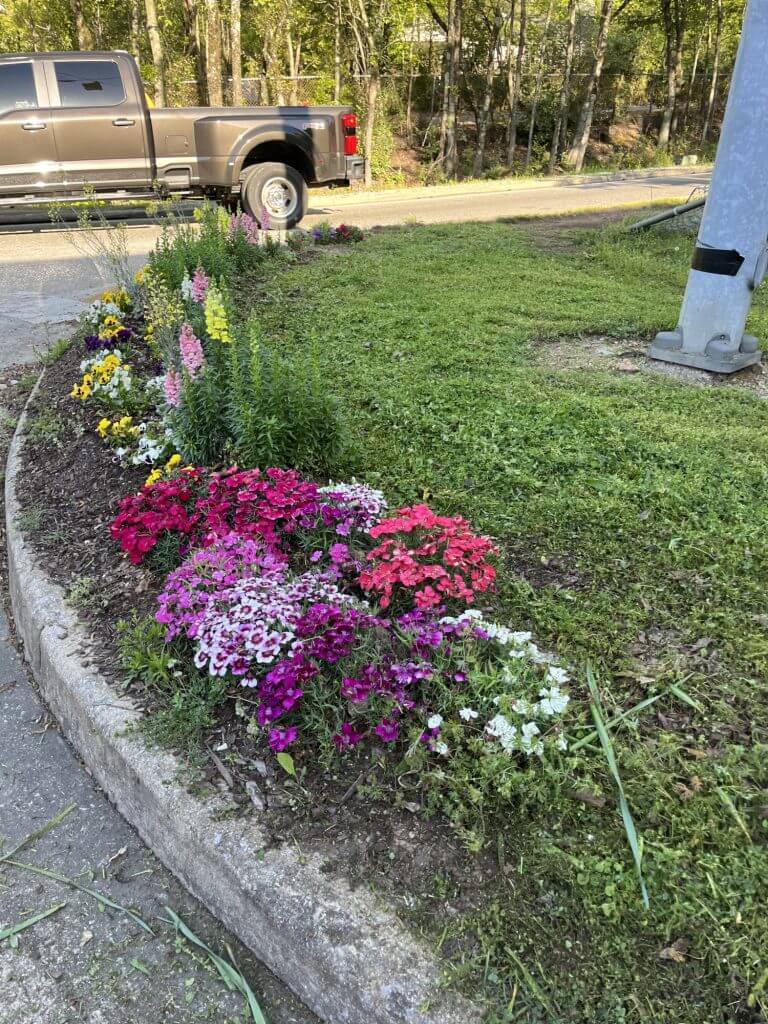
Being a realist, Yielding was familiar with the concept of “asking for forgiveness instead of permission” so without having time to figure out who managed what public areas, he took his lawnmower and weedeater downtown with some trash bags, and cleaned up the entrance and exits leading on and off the Expressway
into downtown. Once he got it cleaned up,
he thought, ‘well, the next logical step is to
beautify these areas with some flowers.’ So
off to Home Depot he went. After his initial efforts, Yielding contacted the head of the City’s Keep Birmingham Beautiful department, who connected him to the City’s horticulture
nursery, and they provided him with plants to help maintain his downtown beautification efforts ever since.
It Takes a Village (or three)
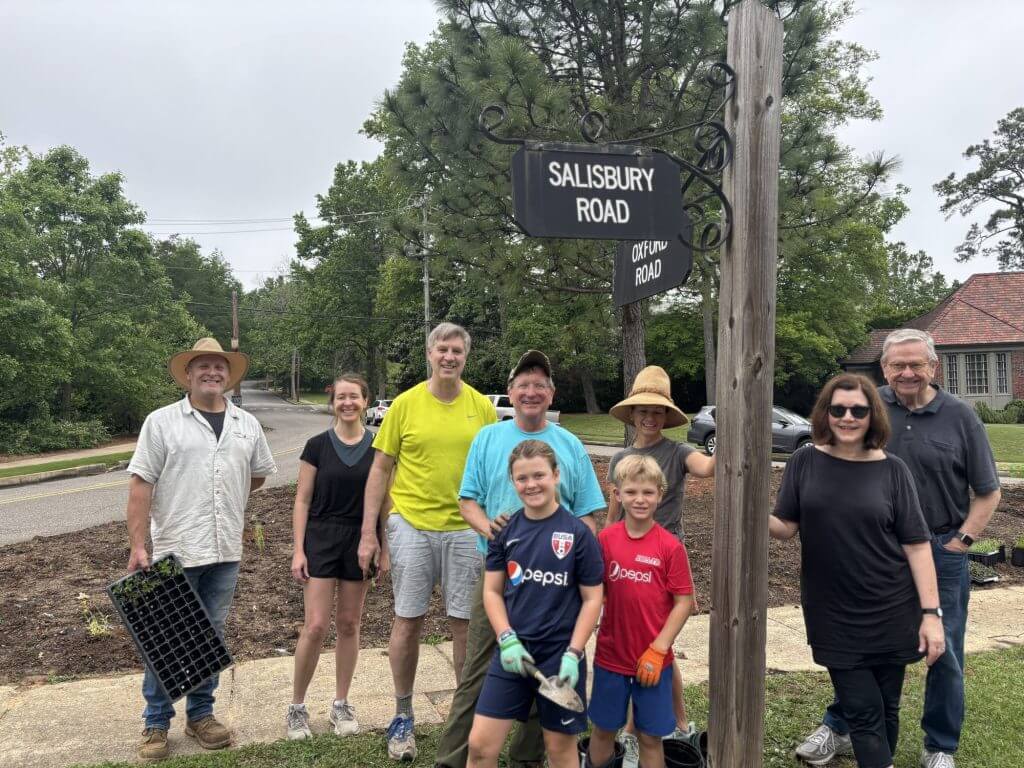
Over the past three years, Yielding expanded his “litter-getter” clean-up and beautification efforts to include the 21st Avenue South/Diaper Row entrance and exit ramps to the Expressway and around Ramsay Park on Montclair Road near where he lives. This led him to discover others, both organized and solo, who likewise have made their own efforts to beautify our community. “There’s a retired ophthalmologist named Bry Coburn who lives in Cherokee Bend and on his way to exercise at the Shades Valley YMCA, he routinely parks his car on Diaper
Row and picks up the trash at the Expressway
entrance and exit ramps,” Yielding says. And with
the help of nearby resident George Jenkins, they created and maintain a public pollinator garden. Similarly, Diaper Row resident Wayne Hester routinely picks up trash there and helps maintain the flower beds Yielding planted. Also, Billy Angel at Oak Street Garden Shop stepped up and donated a $500 credit two years in a row for whatever plants the group needs for its public flower beds.
Phase Two: Water Main Breaks, Native Plants, and Three Triangles
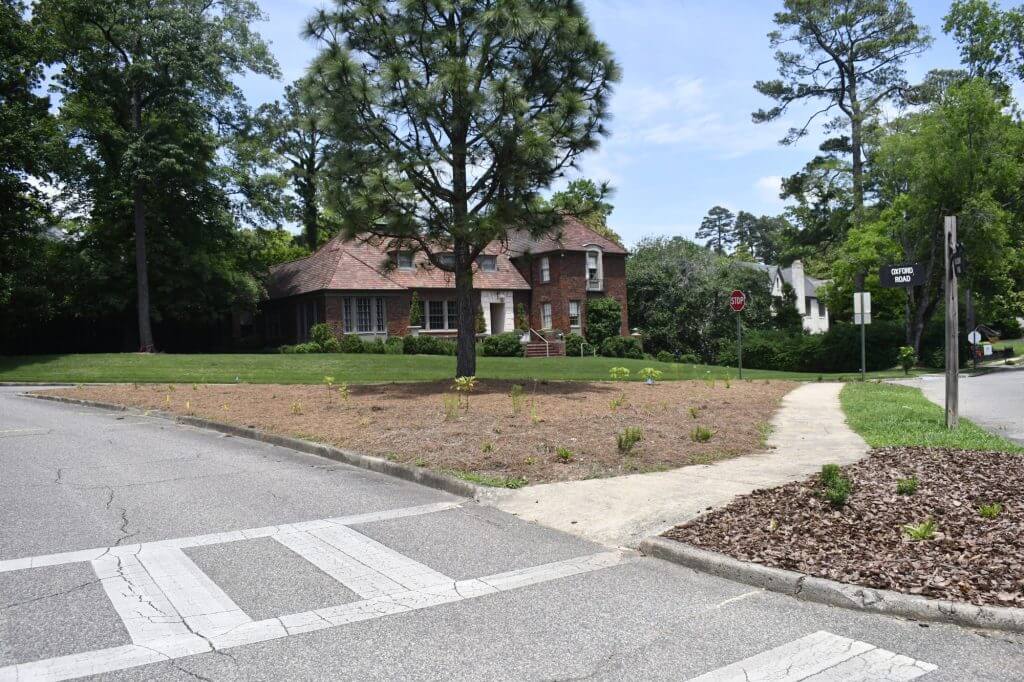
“Last summer on my way home from work one day, I noticed a water main broke on the main traffic triangle in the middle of Salisbury
Road where my parents once lived,” says Yielding, “and it left the whole triangle a mass of mud.” Having just planted several zinnia beds downtown and on Diaper Row, Yielding reached out to someone on the street and said, “Hey, I drive by there every day and rather than ya’ll looking at mud, I’d be glad to throw out some seeds?” They said, sure. At that point Yielding reached out to Dana Hazen, Mountain Brook’s Director of Planning, Building, and Sustainability, to ask for advice. Hazen responded, “If you’re willing to do that, would you consider helping with our efforts to encourage the use of native plants within the city?” Yielding knew nothing about native plants or why the city would be encouraging their use.
Ask Hazen why native plants are important and she offers: “They provide nectar, pollen, and seeds that support the local food web (insects, birds, and other animals). Non-natives do not provide the necessary nutrients for our native animals to thrive. Since they are adapted to local soils and climates, native plants don’t require as much water. Additionally, the deep roots of many native plants increase the soil’s capacity to store water, which is essential for reducing water runoff and preventing erosion.”
Captain Ralph
Yielding soaked all this up (pun intended), read up on the environmental significance of
native plants and became the Captain of the Salisbury triangles native plant installation team. He recruited several Salisbury-area residents, including Tom Warburton, Stephen Gidiere, and Bill Keller, and found further expertise and support from city leaders like Clay Ragsdale, head of the City’s Environmental Sustainability Committee, and Graham Smith, the City Council liaison member. Yielding and his Salisbury team hired a landscape designer with expertise in native plants named Patrick Daniel, and they created a design plan for the Salisbury triangles which involved removing the grass surface and replacing it with a new topsoil/compost surface to provide a rich base for the native plants. The City approved the design and provided the Salisbury team with the needed labor and machinery for the prep work and with funding to purchase the native plants. Since installation in late April, a committee from the neighborhood and the city have developed a partnership to coordinate maintaining and watering the triangles. “The city is excited to see the addition of native plants and flowers in our public areas and to promote partnerships with local residents,” says Graham Smith.
Daniel sums it up nicely, “I think this effort
reflects a closer appreciation of what is around us all the time. For a lot of us, life’s pleasures are simpler.” For Yielding, as he transitions toward retirement, it has provided him with
a rich, meaningful opportunity to continue
to make his own unique contribution to our community.
Authors note: Digging into this story (pun intended) the author realized there was so much going on in the area of environmental sustainability that it
warrants a part two of the subject which Clay
Ragsdale has promised to help with at some point.