By Cathy DeLozier
When President and CEO John Kemp took the helm of the Lakeshore Foundation four years ago, he brought decades of experience, advocacy and vision to a world-renowned organization. “I’m one of the lucky ones who came into a place where the previous—and only—CEO, Jeff Underwood had done such a spectacular job,” Kemp says. “He’s an extraordinary guy, a visionary, who started it and left it well-organized and running smoothly. And the board is just great. There was nothing to fix.”
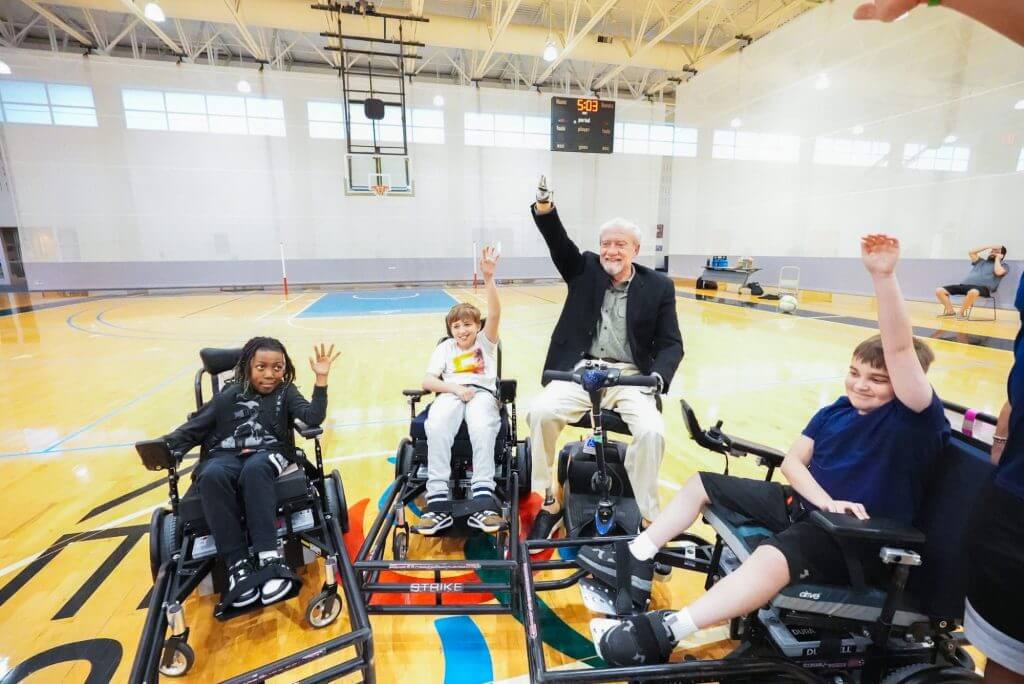
The challenge for Kemp is to fulfill the vision of the Foundation and the board and to keep it fresh and dynamic. The vision is “a world in which every person has the opportunity to achieve a healthy, active, independent life.” On site, 92 aquatic, fitness and recreation programs are provided through memberships, which include family members, for individuals with disabilities, people over 60, and military veterans. “We have 4,000 members making 13,000 visits a month.”
The campus has also been a U.S. Olympic and Paralympic training site since 2003, as well as the home of USA Wheelchair Rugby since 2006. In almost 20 years that the national team has been here, it’s medaled at every Paralympics it’s attended.
Focusing on branding, expansion and growth, both short and long term, has led to some incredible additions in Kemp’s short tenure. In the last two years, the U.S. Olympic and Paralympic Committee has awarded Lakeshore two new national teams: Boccia United States, which is an adapted form of Bocce, and Para Powerlifting. “For Boccia, players can use a headstick or a mouth wand, or even have an operator assist a player using a ramp. They are extraordinary players,” Kemp says. “Para Powerlifting is essentially equivalent to standard powerlifting, only done from a bench. I saw a gentleman lift 519 pounds straight up. It is unbelievable.”
Lakeshore National Adapted Sports Organization (LNASO) was created as an affiliate to manage these high-performance teams. One-third of its Board is required to be athletes, so two representatives from each team provide input, along with members of the parent board and community leaders.
In January 2024, the Sports Science and Performance Center opened at Lakeshore to conduct research and to test people—with and without disabilities—and measure their progress over time with DO2 max testing (oxygen delivery to the body’s tissues), strength conditioning, rest and recovery and nutrition. It’s not just for athletes, and more than 400 enthusiasts have participated. The10- to 13-year-old youth team, the Lakeshore Typhoons, even went through the program. “Our swimmers loved it,” Kemp says. “They were very attentive and cooperative learning how to build up their core muscles and use their assets.”
In addition to taking care of their athletes, Kemp wants to take care of their equipment, too; at least while they’re on site. The Lakeshore Garage idea was born when he visited the wheelchair basketball arena at the University of Alabama’s adapted sports program. “They have a magnificent repair garage right there in the gym, and when I saw it, I had garage envy,” he says. “I said, ‘We need that!’”
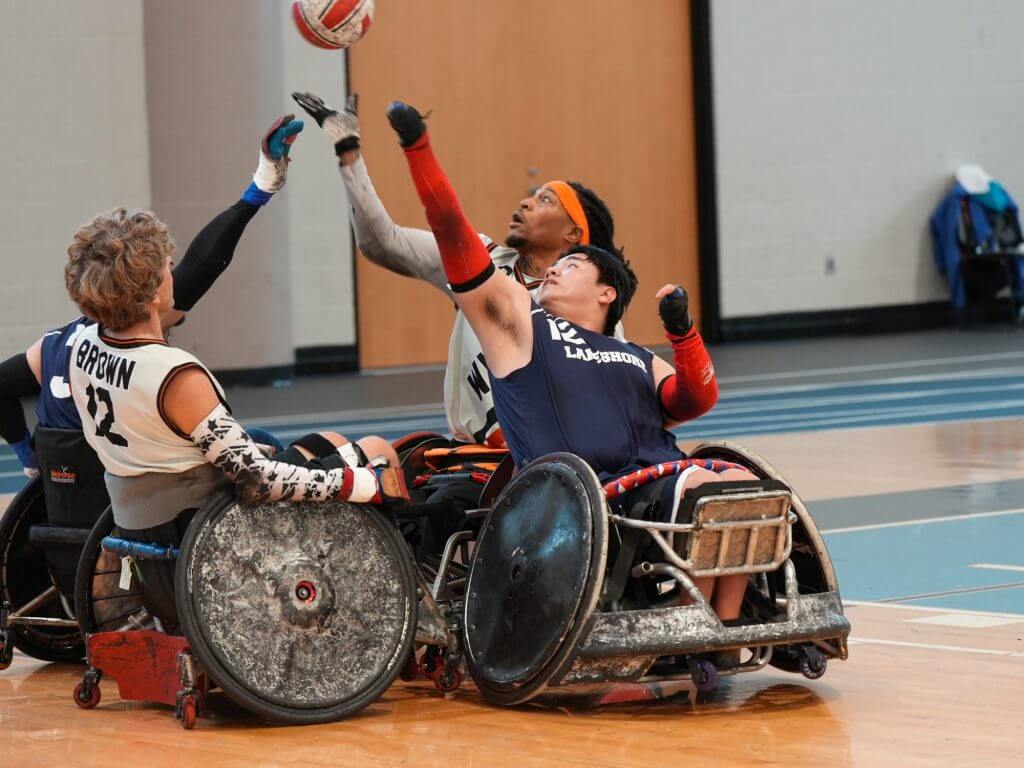
Lakeshore frequently hosts weekend basketball tournaments and participants’ equipment inevitably breaks or gets damaged. “There are maybe 200 people in wheelchairs buzzing around on a full day of games, and something breaks, and nobody carries around an extra arm. An extra wheel, maybe,” Kemp says. “We have a closet that holds about 200 wheelchairs of all types, shapes and sizes for our adaptive sports and a 10 foot by-15-foot space right next to the chair racks that would be perfect for a repair garage.”
A board member donated 3D printers that could print parts or prosthetics for players to get back in the game and last at least until they got home. Kemp envisions volunteers running it and says, “We’re learning more about what the capacity of 3D printers can do to solve problems.”
Community health is another area ripe for expansion. “We do so much to educate people with disabilities all around the country through videos and remote consultations, but we also engage in contracts to deliver community health services,” Kemp continues. “Particularly in rural areas with limited access to proper healthcare, people don’t know how to manage their diabetes, how to stop smoking, how to deal with cancer or how to deal with wound treatments. What if they also have some type of paralysis?”
Licensed Dietician Lacey Gammons heads the nutrition lab that teaches people with disabilities how to eat, including the high-performance teams and anyone else who wants to learn how to cut back on salt or learn how to prepare food. “People have disabilities with a lot of different conditions,” Kemp says. “Diet can be difficult. Swallowing can be difficult. How do individuals overcome those problems? We try to customize as much as we can because we want them to live a good quality life for as long as possible.”
Seriously addressing the issue of mental health, especially among veterans, is a long-term focus that will also lead to a good quality of life. “We have got to help our society and veterans feel that there are resources available,” Kemp says. “While we do not employ a psychiatrist or a psychologist here, they’re on the campus and can be here immediately. We’ve trained all our staff for early warning signs among our own employees and our members, and if they see something, say something and get help. We also feel like this applies to first responders. Just think about what they see on any given Saturday night.”
Consulting and licensing are also planned but are still in process. Kemp says they are constantly being asked by other organizations throughout the country about how to implement Lakeshore programs in other cities. “We feel the demand is out there,” he says. “I think the gain would be tremendous to share our knowledge and experience with others and either bring them here for training or send our staff to them.”
Coming soon is a new podcast, Nothing Without Us, hosted by Birmingham’s own Alie B. Gorrie. Kemp was her first guest. “We’ll feature people with disabilities and people who are deeply involved in the lives of people with disabilities,” Kemp says. “The title references a movement chant that nothing should be considered without us. The ultimate goal is to be economically self-sufficient, so there will definitely be some podcasts on the world of work.”
He continues, “It’s the one area after 35 years of having the Americans with Disabilities Act where our employment rate has risen only one percent. Approximately 34 percent of disabled adults are working now and 35 years ago, the number was 33 percent. It’s atrocious. I think a lot of us want to work, to buy our flat screen TVs and cars and have our independence and live in our own homes.”
Kemp has advocated for years for full civil rights for more than 70 million Americans with disabilities. In 1995, he co-founded The American Association for People with Disabilities, which is a disability-led organization that promotes equal opportunity, economic power, independent living and political participation.
Moving to Birmingham and working at Lakeshore has been a great convergence of his professional and personal lives. His wife of 24 years has children and grandchildren here and he often came to Birmingham on business and had meetings at Lakeshore. Upon taking the job, Kemp thought, “Where do we want to go? And where does Lakeshore fit in best; not only in Birmingham or Alabama, but in the United States and in the world?”
For more information, go to lakeshore.org.