By Anne Ruisi
Festivalgoers can rely on the Persian chicken, brisket, falafels, mandelbrot and other foods served at the Levite Jewish Community Center’s Jewish Food and Culture Fest on April 14 being kosher. The center has an expert who ensures that it is.
“I am a rabbi. So, I know about kosher. And so, when the JCC needs help with kosher, I help,” said Rabbi Yossi Friedman, program director of Chabad of Alabama and an LJCC volunteer who supervises the center’s kosher kitchen.
There are many kosher foods, all biblically grounded in Jewish teaching or the Torah – which Christians know as the first five books of the Bible. These complicated dietary rules are the technical aspect of kosher, but the prohibition against pork is probably the most recognizable. Another is the kosher regulation against mixing meat and dairy.
“The Torah uses the phrase, ‘do not boil the kid in its mother’s milk,’” referring to a young goat, a traditional meat in Middle Eastern culture, Friedman said.
Among the acceptable land animals for kosher cooking are cow, sheep, deer, chicken, turkey and duck. Eggs are fine if they come from a kosher animal and do not have any blood spots, while cow’s milk and certified kosher cheeses are fine.
Regarding seafood, the water animal must have fins and scales to be kosher. Southern favorites like shrimp, oysters and catfish are out, but salmon, tuna, cod and mahi-mahi are in.
Among the non-kosher foods besides pork are rabbit, eel, caviar from nonkosher fish, bread products that include dairy, cheeseburgers and other foods mixing meat and cheese and amphibian-related food, such as frog legs.
Pickles are kosher, as are most fruits and vegetables, but how they are prepared can render them non-kosher. A baked potato can be fine, unless it’s served loaded with sour cream, cheese and bacon bits.
Food deemed as kosher isn’t defined only by the type of food. It refers to food that has been specifically prepared and cooked in certain ways.
“Our grandmothers went to the farm … and then went to the butcher and had it cleaned, and so on. And so we knew what we were eating,” he said. “Nowadays, we have no idea where this happens, so how do you know if it’s kosher? So … it’s a much more complicated process and therefore requires a kosher supervisor.”
Kosher also means you know what you’re getting. For meat to be kosher, the animal must be from a species that is kosher, then it must be slaughtered and processed in certain ways that render the meat kosher, the rabbi said.
Ingredient production and preparation aren’t the only concerns regarding whether food is kosher, Friedman said. Trucks, for example, that carry kosher food need to be approved and certified as kosher. For example, someone keeping kosher wouldn’t want to consume a cooking oil that’s been transported in a truck or tanker that carried lard, which comes from pigs.
With so many regulations, how do you know if a food is kosher? Food certified as kosher through the Union of Orthodox Rabbis out of New York, for example, meet kosher requirements and are stamped with symbols on packaged food to let you know it’s acceptable.
There are hundreds of symbols for “kosher” found around the world on packaged food. In the United States, among the most recognizable is the letter U inside a circle.
“This is the most widespread, the biggest. But it’s not the only one and therefore part of my job is to know which symbols are reliable,” Friedman said.
Unlike cities with larger Jewish populations, there are no Jewish food stores in Alabama, so that’s why shoppers looking for kosher foods need to check food packages for a trusted kosher symbol. Boxes of Cheerios at the supermarket have a trusted kosher symbol, but marshmallows aren’t kosher because the gelatin used to make them comes from nonkosher animals.
Kosher regulations extend to the equipment used to cook and prepare food. In the LJCC’s kosher kitchen, for example, utensils used on the dairy side are washed and kept separately from the meat side, and vice versa.
If somehow a kosher kitchen is rendered nonkosher, there’s a process to render it kosher that “usually requires a lot of boiling water, and in some cases, a blowtorch,” Friedman said, adding this doesn’t happen often.
Another major aspect of kosher regulations is that, by design, it creates a social bond in the Jewish community, which needs to depend on itself for kosher food.
“Coffee is kosher, almost universally, but it’s not too easy to go for dinner,” if you are keeping kosher in areas without large Jewish communities, like New York City has, Friedman said.
The LJCC has the only kosher restaurant in Alabama, the rabbi said. Jews traveling through Birmingham rely on it to keep kosher.
Jews are not required to keep kosher and many in America don’t, Friedman said.
“It is strictly a question of how loyal you are to Jewish tradition,” he said, estimating that perhaps 1 million of the 5.5 million Jews in the U.S. follow kosher dietary laws.
And you don’t have to be Jewish to follow Jewish dietary laws. There are some Christians who will only eat kosher food, and other non-Jews believe keeping kosher is better for their health, Friedman said.
“There’s actually many, many more than just traditional Jews who are looking for the kosher symbol,” the rabbi said.
Jewish Food and Culture Fest Set for April 14
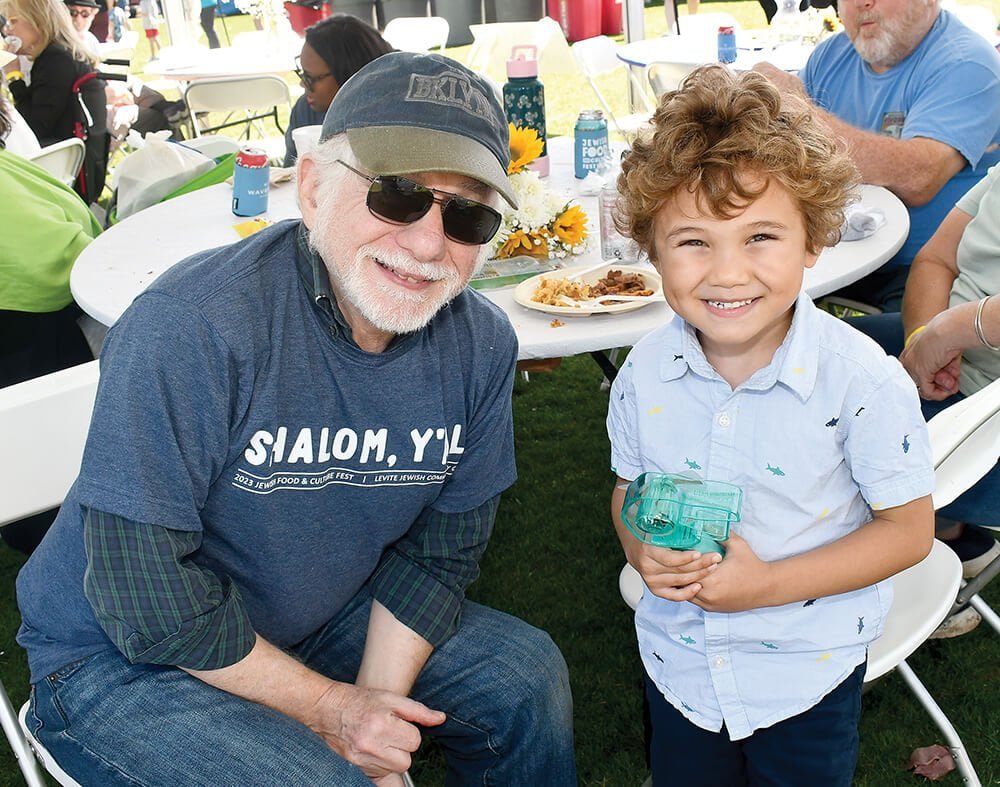
Count on great kosher food and lively music at the Jewish Food and Culture Festival at the Levite Jewish Community Center in Birmingham on April 14.
Rabbi Yossi Friedman, an LJCC volunteer who ensures the festival’s food is properly prepared according to kosher regulations, said there usually is a good turnout for the festival.
“I think last year they had almost 3,000 people.”
The festival, which will be from 11 a.m. to 3 p.m., will feature a wide variety of tasty fare representing Jewish food traditions. Many of the recipes are family favorites passed down from generation to generation.
Beef brisket, Persian chicken, stuffed cabbage rolls, falafels, pickles, noodle kugel casserole, corned beef sandwiches, couscous, matzah ball soup and pickles are among the savory dishes on the menu. For your sweet tooth, try the rugelach pastry and mandelbrot, a twice-baked loaf that’s cut in slices resembling Italian biscotti.
Festivalgoers can enjoy Jewish music, Israeli dance performances and Israeli art and culture. Area synagogues will have presentations or booths on Jewish culture.