By Donna Cornelius
In a cheerful kitchen, a group of women laugh, talk and ask questions. Some are giving instructions, while others try their hands at peeling potatoes or mixing a salad dressing.
It’s a scene that could play out in any cooking class, but this one’s a little different. The enthusiastic teachers are members of Les Dames d’Escoffier International’s Birmingham chapter, and the eager students are residents of The WellHouse, a Birmingham-area facility for female victims of human trafficking.
LDEI Birmingham – whose members are women leaders in the food, beverage and hospitality industries – is just one of the organizations offering educational, inspirational or just plain fun programs for WellHouse residents.
Brianna Pierce, The WellHouse’s volunteer coordinator, said that the support of groups, churches, businesses and individuals is essential to the WellHouse mission, which is: “We exist to honor God by rescuing and providing opportunities for restoration to female victims of human trafficking who have been sexually exploited.”
“We have regular volunteers who teach classes, like LDEI,” Pierce said. “Some come weekly for things like art therapy or sewing. There are Bible studies. Some do a one-time event, such as dinner and a game. Other organizations do a ‘serve day’ and take on a special project on the campus.”
The WellHouse started in 2010 in Woodlawn and welcomed its first resident the following year. Pierce, who has a bachelor’s degree in Christian ministry, came on board in September to oversee volunteers, mentors and interns.
“We don’t actually rescue these women,” she said. “We partner with groups that do.”
Now there are five homes on The WellHouse campus, a sprawling property in a rural setting.
“The first place they land is the Stabilization Center,” Pierce said. “It’s a smaller home – it’s just one resident and a staff member or two. There’s an evaluation and, in some cases, detoxing.”
Next is the Immediate Shelter, which houses up to 10 women.
“This step is about helping them get back to a routine, helping them get a form of their identity back.” Pierce said. “That’s something traffickers often take from them. We build a plan – what are their goals while they’re here? We start them on therapy and recovery programs.”
She said this part of the program usually lasts three to five months and is “a very individualized thing.”
Next Steps to Freedom follows, and it’s where residents begin to take part in volunteer classes and activities.
“It’s a nine- to 12-month program,” Pierce said. “Some of these ladies are starting to work. ShopWell is our social enterprise with jewelry, candles and more. We help them with education – getting their GED or taking college courses.”
Finally comes Next Steps to Independence.
“They graduate and have the option to live in our apartments,” Pierce said. “It’s a good buffer between our program and being completely on their own.”
There’s also another home and program: WellHouse Child for ages 11-17.
Cooking and Companionship
Sonthe Burge, a registered dietitian nutritionist, is one of the LDEI members who coordinates the group’s WellHouse committee. Members of the committee sign up to take turns teaching or helping to lead the cooking classes. The philanthropic organization also funds scholarships and grants for Alabama women pursuing careers in food.
The association between Les Dames and The WellHouse was formed when a former LDEI member now involved with The WellHouse’s women’s auxiliary approached LDEI past presidents Kathy G. Mezrano and Susan Swagler to suggest a connection.
“The WellHouse staff felt the residents would enjoy and benefit from cooking classes,” Burge said. “Susan and Kathy agreed this would be a wonderful relationship and reached out to LDEI member Pat Terry.” Like Burge, Terry is a registered dietitian nutritionist with experience in teaching healthy cooking.
“Pat really got the ball rolling by including other like-minded Dames and forming an LDEI Wellhouse Committee, which has provided monthly cooking classes since 2021,” Burge said.
Burge said she wanted to get involved with the cooking classes because “I have a heart for service and wanted to do something that was a little under the radar.”
“This is a very subtle, private way to serve,” she said. “It has been very rewarding to meet the ladies, have conversations and encourage them to continue their path to healing. I hope we can help make them realize they’re exactly where they need to be.”
Burge also has a very personal and poignant reason for supporting The WellHouse.
“About 12 years ago, when I had a nutrition counseling practice, I had a patient – a young girl – who came to me about weight loss,” she said. “There was a man with her who said he was her father, but he very clearly was not.
“I was worried about her and tried to get in touch with her after her visit, but I never could. This is a way of providing the help for these ladies that I wasn’t able to provide for her.”
Burge said the best part of being a volunteer is getting to know The WellHouse residents and “having fun together in the kitchen.”
“We want to show that you don’t have to be a talented chef to create a delicious, nutritious and affordable meal,” she said.
The LDEI WellHouse committee has about 21 active members. One of them is Kate Nicholson, former food, cookbook and recipe editor for publications such as Southern Living and Food & Wine.
“I’m not sure how or when I was made aware of The WellHouse and its purpose, but I’m glad I was,” she said. “And knowing that the Birmingham Les Dames includes The WellHouse in their volunteer and contribution efforts, I wanted to be a part of that group.”
Nicholson said every time she leaves The WellHouse after a cooking class or meeting, she’s “just a bit changed.”
“It’s, as they say, all about perspective, and The WellHouse ladies are a great reminder,” she said. “Their positive attitude and determined will is nothing short of inspiring. And in addition to a revised perspective, I am always humbled, very humbled.”
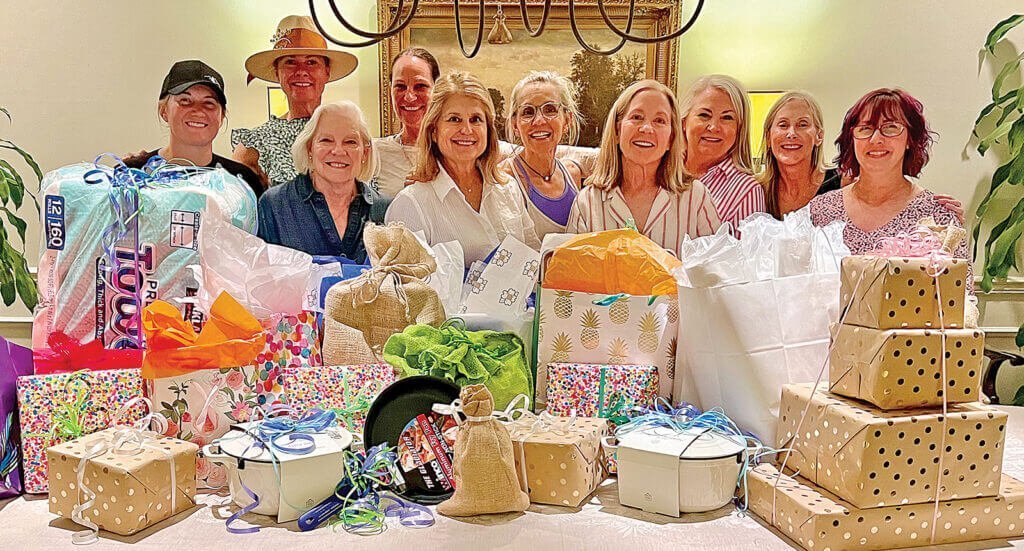
LDEI recently hosted a kitchen shower for the facility to help supply needed utensils and did a “spring clean” kitchen makeover. The Auburn University culinary science program, on which LDEI member Ana Plana is a faculty member, donated several boxes of utensils to the WellHouse kitchen.
In addition to the classes, LDEI provides casseroles for the residents’ meals during the summer.
Turkey burgers, Greek salad, a salmon-edamame rice bowl and smoothies are among the healthy and yummy foods that have been produced in the classes. LDEI members always try to involve their WellHouse students in the food plans.
“The last time I went, several ladies had said they wanted to make moussaka, a Greek dish traditionally made with eggplant,” Burge said.
When she and the other volunteers arrived, however, they learned that the moussaka fans weren’t in class that day – and that the ladies who were didn’t care for eggplant.
“We had these beautiful eggplants that I hated not to use, so we made two versions of moussaka – one with eggplant and one with potatoes,” Burge said. “The ones who tried the eggplant version said they actually liked it. Taking their requests into consideration helps us build trust; it shows that we’re listening.”
Sometimes, the class leaders don’t even use a recipe.
“We show them how to ‘shop your pantry,’” Burge said. “We let them know that it’s OK to use frozen or canned foods for convenience.”
The residents who sign up for the classes have a range of culinary experience.
“Some of the ladies have a background in food service, while some have never even sliced an onion,” Burge said. “We tell them our classes are not cooking shows – they’re hands-on experiences. We ask, ‘Who will brown the meat?’ ‘Who wants to crack the eggs?’”
A few of the Dames who volunteer have food businesses and have inspired the residents to follow their own career dreams.
“Some of the ladies are eager to learn more about that, and one has already started writing a business plan for her own restaurant,” Burge said.
Kate Nicholson also appreciates the way the participants approach the culinary learning experience.
“The WellHouse ladies really do seem to love the cooking classes, especially participating in them,” she said. “Who knows, maybe we are inspiring some future chefs, because it really is about their positive future.”
Like other LDEI committee members, Burge is always happy to join The WellHouse women in the kitchen.
“When we show up with fresh fruits, vegetables and smiles, they have been very grateful,” Burge said. “It’s wonderful to hear them say, ‘We’ve been looking forward to this all week.’”
A Growing Concern
Human trafficking is about a $150 billion-a-year industry. The State Department estimates 27.6 million people worldwide currently are victims of human trafficking, which is the fastest-growing criminal activity behind narcotics.
On a bright note, Pierce said 81% of The WellHouse’s graduates have not gone back to the trafficking industry.
LDEI is just one of several community-spirited organizations that supports The WellHouse through volunteering. Pierce said those who want to help can do so in several ways.
“If you have resources, share them,” she said. “You can lead classes, take on projects, do an activity.
“For individuals, you can volunteer to be a mentor. That’s in the Next Steps to Freedom program. This is someone who leads by example, and they are very influential with our mentees.”
She said men don’t interact with the residents, but they can support The WellHouse by working around the facility or taking on a specific project.
Volunteers must successfully complete an application and security process before they can begin participating in a program.
For more information, visit the WellHouse website at the-wellhouse.org, get volunteer applications at the-wellhouse.org/volunteer or browse ShopWell at shopwell-wellhouse.org.