By Nausicaa Chu
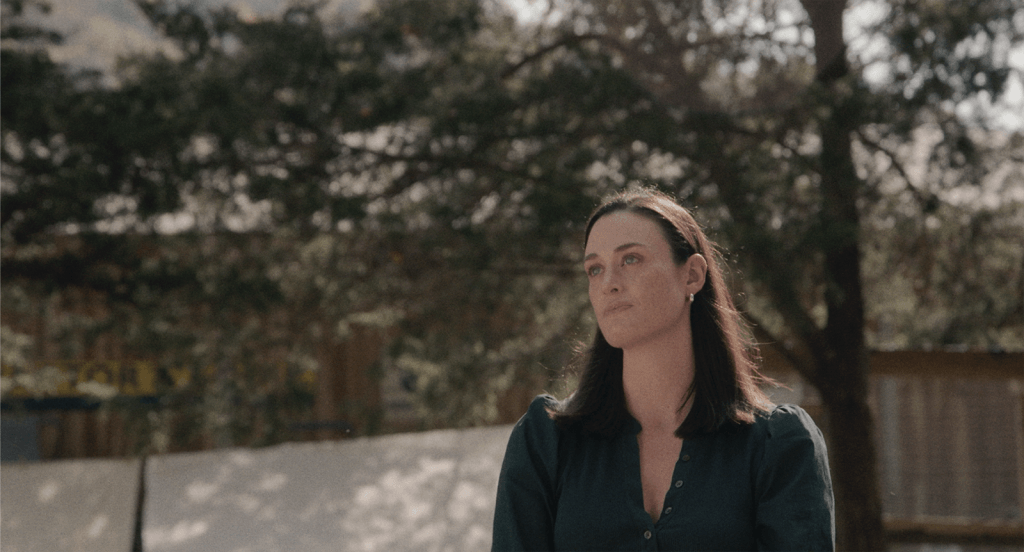
Birmingham’s Emily Capilouto knows her way around the healthcare system. She worked in India on cervical cancer screening access, has two master’s degrees in epidemiology and medical anthropology and directs outreach initiatives for prostate cancer at the Mike Slive Foundation.
But nothing could have prepared her for her quest to have a child.
As a medical process, in vitro fertilization (IVF) is precisely understood. Treatments are timed down to the hour, risk rates can be calculated to two decimal places and every step is described in minute detail with a baffling array of terminology: “controlled ovarian stimulation,” “intracytoplasmic sperm injection,” “preimplantation genetic testing.” Yet IVF, at its core, is more than a step-by-step procedure— it is an unpredictable, often devastating and ultimately lived experience.
“You can be prepared in a logical way and understand the steps it takes to do this process with hopes of eventually having a child through IVF, but on the other hand, you never really can be prepared for IVF,” says Capilouto.
A new documentary debuting on August 29th at the Sidewalk Film Festival called Show Me the Line, produced by Stacey Davis and directed by Kelsey Lanuzzi, follows Capilouto and other IVF patients as an Alabama Supreme Court ruling disrupts their treatment. That ruling thrust Capilouto and fellow patients into the national spotlight as they advocated for IVF access. The documentary highlights the small moments in the midst of this larger reckoning: the women form friendships, go to hospital visits and connect with their families. “This is a beautiful intersection of storytelling and art and empowerment all in one documentary,” says Capilouto.
Capilouto’s IVF journey began five years ago. On May 28, 2021, Capilouto married Dr. James Harb. The New York Times featured their nuptials in its Mini-Vows section. After the wedding, the couple started trying for a child.
That was when Capilouto went off birth control for the first time, which revealed a congenital heart defect that had not previously presented symptoms. UAB doctors cured the heart defect but warned it might be hereditary.
The doctors recommended preconception screening, and Capilouto came back positive for a rare genetic mutation that could lead to a being child born without functioning bone marrow. “Until about age two, our child would seem pretty normal. And then they would effectively get cancer,” says Capilouto.
Medical providers suggested screening Harb for the mutation, too. “The genetic counselors told me, ‘Oh, this is so rare. It’s highly unlikely your spouse will have this too because you’re just a carrier of it, but let’s get him screened just in case,’” says Capilouto. Harb had not only the same genetic mutation, but the exact same subtype of genetic mutation. “We had a really high chance of having a child born without functioning bone marrow,” says Capilouto.
The couple decided to begin the IVF process, during which clinicians test embryos for genetic mutations. It took two and a half years before Capilouto had her first transfer, a period that included egg retrievals and genetic testing. “Not only the procedures, but the amount of time it takes for them to collect everything they need to even begin these processes takes the longest amount of waiting,” says Capilouto.
The first transfer was unsuccessful. The second time, Capilouto had a miscarriage. “We were not prepared for that because on paper we looked like ideal candidates,” says Capilouto.
On February 16, 2024, the Alabama Supreme Court ruled that frozen embryos made through IVF should be considered children. Clinics across the state paused IVF treatments, citing concerns that doctors could face legal risk by providing care. Capilouto decided to speak out against the ruling. “I was quite literally fighting for my family,” she says.
The ruling also upset her for another reason. “When all of this happened, it not only impacted me and my family, but it also impacted those that I work for every day,” says Capilouto. Some cancer patients freeze their eggs or sperm before treatment, as chemotherapy and radiation treatments can damage fertility.
The ruling could prevent such patients from accessing fertility preservation procedures. “They in turn delay potentially life-saving treatments or surgeries as a result,” says Capilouto.
The New York Times featured Capilouto again, but for a more somber story about the ruling’s impact on IVF patients. Capilouto described her hurt and despair. Capilouto also spoke to PBS, AL.com, Good Morning America, and the United Kingdom’s The Sunday Times. “IVF is already a very devastating place for the most part. And I wasn’t going to be silent and just allow that to happen to all of us,” says Capilouto.
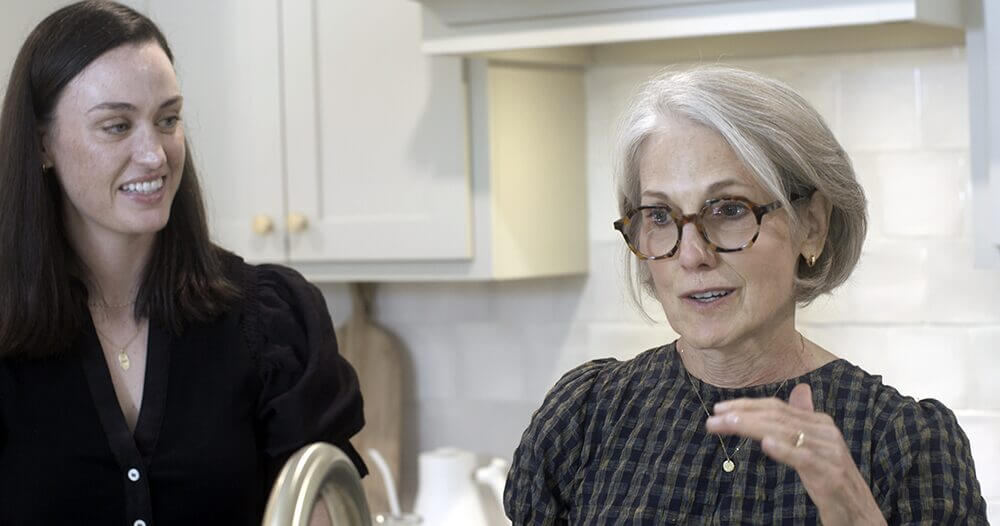
Amid the national uproar over the Alabama ruling, Capilouto relied on her mother, Mary Lynne Capilouto, for support. Her mother was in one of the first cohorts of Alabama women to receive IVF treatment. That treatment was unsuccessful, so the younger Capilouto was adopted.
Mary Lynne Capilouto would accompany her daughter to appointments and egg retrievals, offering encouragement when things went well and comfort when things did not. “It really strengthened our bond to be able to not only have my mom as my mother but also tap into this part of her where she is also a peer that went through this and can guide me,” says Capilouto.
As public backlash against the ruling continued, lawmakers scrambled to create legislation to resume IVF treatments. On March 6, 2024, Governor Kay Ivey signed a bill that granted civil and criminal immunity to clinics providing and patients using IVF treatment. Clinics reopened statewide.
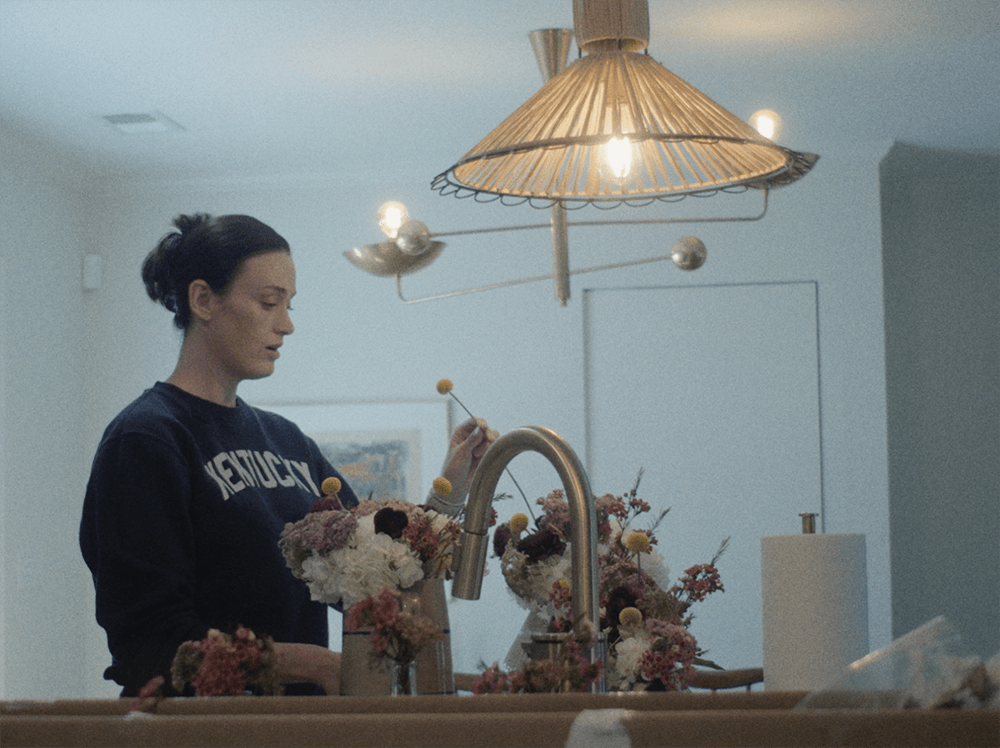
Throughout the turbulent process, Capilouto found solace in arranging flowers with her mother. The documentary shows them making colorful bouquets. “That’s something that I’ve come back to a lot when I am stressed out—the therapeutic approach of designing something, creating something, especially flowers, and then getting to give them to other people,” she says. “That brings me a lot of peace and joy.”
Another source of joy was connecting with other women going through IVF. “Through this process, the women I met that are advocates and also the women that are featured in the documentary have quickly become lifelong friends,” says Capilouto. “We just truly have some of the most wonderful people here.”
In 2025, almost four years after her IVF journey began, Capilouto’s third transfer was successful. She was pregnant. “IVF can be a very heartbreaking journey, so I spent nine months just worried every minute,” says Capilouto.
But her pregnancy went smoothly, and in December 2025—four days after her birthday—Capilouto gave birth to her son. Her mother was in the delivery room. “To see her with her grandchild, it feels very full circle,” says Capilouto.
IVF treatment in Alabama is not a resolved issue. The 2024 legislation was designed as a short-term measure to reopen clinics and did not address the core of the Alabama Supreme Court ruling—that embryos are children. “There’s still work to be done to protect access to IVF and fertility treatments in Alabama,” says Capilouto.
But Capilouto’s personal IVF journey has ended.
If she could travel back and speak to herself at the start of the process, Capilouto would say this: “It’s going to be a longer process than you can imagine, and that part is going to hurt more than you could ever anticipate. But there are people that are cheering for you that you may not even know, and their prayers and their support will hold you up during this time. So lean on them. Get out there. Don’t let this take away your joy, because through the difficulty, there is joy.”
Debut at Sidewalk Film Festival
Show Me The Line will debut at the Sidewalk Film Festival on August 29, at 5 p.m. at the Lyric Theatre, with an encore screening at 7 p.m. at the ASFA Dorothy Jemison Day Theater in downtown Birmingham, each followed by an in-depth Q&A panel with the director, Kelsey Lanuzzi, producer, Stacey Davis, and participants Abbey Crain, Emily Capilouto, Jamie Heard and Veronica Wehby. Tickets available at sidewalkfest.com/festival/schedule/